Affiliate Disclaimer: This post contains affiliate links. If you purchase through them, I may earn a small commission at no extra cost to you. I only recommend programs I genuinely believe can help you and your dog.
The first week with a new puppy is a strange mix of pure joy and quiet panic. One minute you are melting over a sleepy little face, the next you are mopping the kitchen floor for the fourth time and wondering whether you have any idea what you are doing. If that sounds familiar, you are exactly where every good dog owner starts.
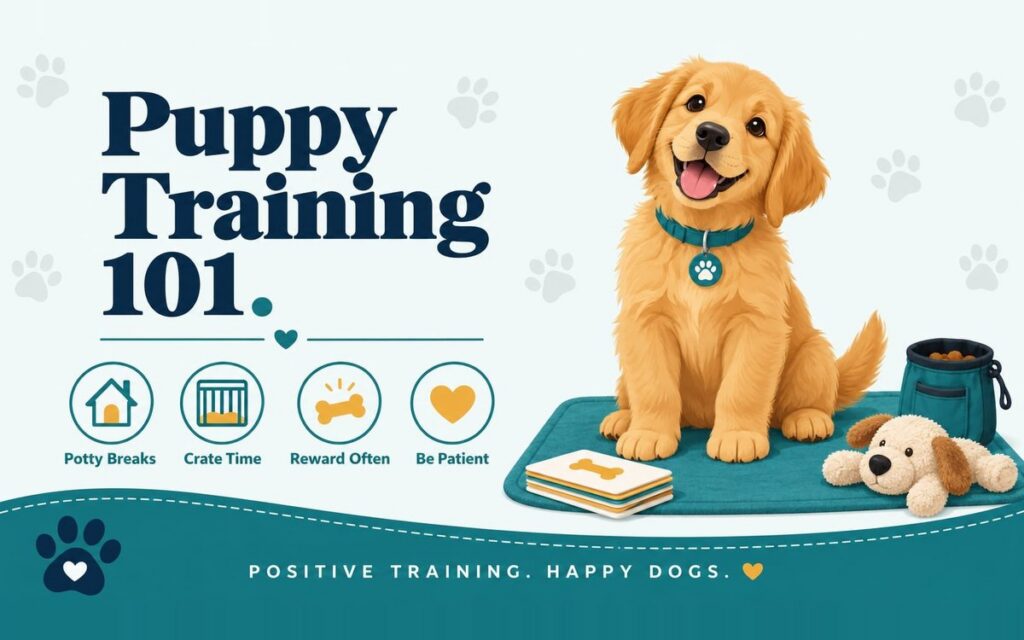
Puppy training does not require a professional background, expensive equipment, or hours of free time. It requires a clear starting point, a handful of treats, and a few minutes of focused practice spread through your day. This guide gives you that starting point. It covers when to begin, the five foundations every puppy needs, how to structure your sessions, and the mistakes that slow puppies down without owners ever realizing it.
When Should You Start Training a Puppy?
The short answer is the day your puppy comes home. Most puppies join their new families at around eight weeks old, and they are already learning from every single thing that happens around them. They are figuring out where they get attention, what earns them a treat, and which corners of the house are interesting to explore. Training simply means you take charge of what they learn instead of leaving it to chance.
That does not mean drilling a tiny puppy for an hour. Early training is gentle and playful. A few repetitions of their name, a reward for sitting, a trip outside after every nap. These small moments add up quickly, and puppies between eight and sixteen weeks are remarkably quick learners. Habits formed now tend to stick for life, which is wonderful news for the good ones and a good reason to avoid accidentally building bad ones.
Why Positive Reinforcement Works Best
Every method on this site is built on positive reinforcement, which means rewarding the behavior you want so your puppy chooses it again. A reward can be a small treat, warm praise, a game of tug, or access to something your puppy wants, like going through a door or greeting a friend.
This approach works because puppies repeat whatever pays off. When sitting politely earns a treat and jumping earns nothing, sitting wins. Reward-based training also protects the most important thing you are building in these early weeks, which is trust. A puppy who has been scolded or frightened often learns to avoid their owner rather than listen to them. A puppy who has been rewarded learns that paying attention to you is the best game in town.
It is worth saying clearly that punishment-based tools and harsh corrections have no place in puppy training. They can create fear and anxiety at the exact age when your puppy is forming their view of the world. Kindness is not the soft option here. It is the effective one.
The Five Foundations Every Puppy Needs
You could spend months teaching a puppy clever tricks, but these five foundations matter far more. Get them in place and almost everything else becomes easier.
1. House Training
Toilet training is usually the first thing on every new owner’s mind, and for good reason. The secret is a predictable routine. Take your puppy outside first thing in the morning, after every meal, after every nap, after play, and last thing at night. When they go in the right spot, reward them immediately with a treat and cheerful praise. If an accident happens indoors, clean it calmly with an enzyme cleaner and simply supervise more closely. Never punish accidents, since that only teaches your puppy to hide when they need to go.
For a detailed day-by-day plan, see my potty training schedule, and if you live without a garden, the guide to potty training a puppy in an apartment walks through pads, balconies, and elevator dashes.
2. Crate Training
A crate, introduced kindly, becomes your puppy’s own safe den. It helps with house training, because puppies naturally avoid soiling their sleeping area, and it gives you a safe place for your puppy when you cannot supervise. The key is to make the crate a happy place: meals inside, special chews inside, and short periods with the door closed that slowly grow longer. My crate training schedule covers the whole process, and your puppy’s first night home deals with those tricky first few nights.
3. Socialization
Socialization means giving your puppy calm, positive experiences with the sights, sounds, people, surfaces, and animals they will meet throughout life. The most important window closes at around sixteen weeks, so this is time-sensitive. Quality matters more than quantity. A puppy who watches traffic from a quiet bench with a pocketful of treats learns more than one who is overwhelmed in a crowded market. Use my puppy socialization checklist to keep track.
4. Bite Inhibition
Puppies explore the world with their mouths, and those needle teeth are sharp. Teaching your puppy to be gentle with their mouth is one of the most valuable lessons they will ever learn. Redirect biting onto toys, pause play when teeth touch skin, and give plenty of appropriate things to chew. The full method is in my guide on how to stop puppy biting.
5. Name Recognition and Attention
Before your puppy can learn any command, they need to learn to look at you. Say their name in a happy voice, and the moment they glance your way, reward them. Repeat this many times a day in different rooms. It sounds almost too simple, but a puppy who turns toward you whenever they hear their name is a puppy you can teach anything.
Your First Commands
Once the foundations are underway, you can start on the basic cues. Most puppies are ready for these within the first couple of weeks at home.
- Sit. Hold a treat at your puppy’s nose and move it slowly up and back over their head. As their bottom lowers, say “yes” and reward.
- Down. From a sit, lower a treat slowly to the floor between their paws and reward when their elbows touch the ground.
- Come. Crouch down, say their name and “come” in an excited voice, and reward generously when they reach you. Never call your puppy to you for something unpleasant.
- Leave it. A lifesaving cue that teaches your puppy to turn away from something on the floor. My leave it and drop it guide breaks it into easy steps.
- Loose leash walking. Start indoors with a light lead and reward your puppy for walking beside you. The leash training guide takes you from the living room to the street.
When you are ready for more, the eight essential dog training commands post builds on these.
How to Structure Training Sessions
Puppies have short attention spans, so long sessions do more harm than good. Aim for three to five sessions a day, each lasting just three to five minutes. Stop while your puppy is still keen, ideally on a success, so they finish every session feeling like a winner.
Use small, soft, smelly treats that your puppy can eat in a second. A treat the size of a pea is plenty. Count part of your puppy’s daily food allowance toward training rewards so they do not gain weight. If you would like to make your own, my homemade puppy training treats recipes are quick and inexpensive.
Train in a quiet room first, then gradually add distractions. A puppy who sits beautifully in the kitchen may forget everything in the park, and that is completely normal. Every new environment is a new lesson, so go back a step whenever you move somewhere more exciting. Many owners find a clicker helps them mark the exact moment their puppy gets it right.
To keep everything organized, a written plan helps more than you might expect. My puppy training schedule by age lays out what to focus on each week from eight weeks to six months.
Common Beginner Mistakes
Expecting Too Much Too Soon
A ten-week-old puppy is a baby. They will have accidents, forget cues, and get overexcited. Progress comes in small steps with plenty of setbacks along the way. Celebrate the good days and treat the bad ones as information.
Inconsistent Rules
If one person lets the puppy on the sofa and another does not, your puppy cannot win. Agree on house rules as a family and use the same words for the same cues. Consistency is what turns lessons into habits.
Repeating Cues Over and Over
Saying “sit, sit, sit, SIT” teaches your puppy that the cue is “sit sit sit sit.” Say it once, help them succeed, and reward. If they do not respond, make it easier rather than louder.
Too Much Freedom Too Early
Puppies who wander the whole house unsupervised have more accidents and chew more things they should not. Use baby gates, a playpen, and the crate to keep your puppy’s world small and manageable, then expand it as they earn your trust.
Forgetting to Reward Calm Behavior
We tend to notice puppies when they are naughty and ignore them when they are good. Flip this around. Whenever your puppy lies quietly, chews their own toy, or settles on their bed, calmly drop a treat between their paws. You will be amazed how quickly calm becomes their default.
Exercise, Play, and Rest
Training works best with a puppy whose needs are met. Young puppies need play and mental stimulation, but they also need a surprising amount of sleep, often eighteen hours or more a day. An overtired puppy behaves much like an overtired toddler, with more biting, more zoomies, and less listening. Short training sessions, gentle play, and enrichment activities like snuffle mats and stuffed chew toys tire the brain without overdoing it on growing joints.
Simple training games are a brilliant way to combine learning and fun. Hide and seek, find the treat, and a gentle game of tug with clear rules all build focus and bond you closer together.
Puppy Training FAQ
How long does it take to train a puppy?
Most puppies grasp the basics like sit, their name, and a reliable toilet routine within the first two to three months at home. Real reliability, where your dog listens in the park as well as in the kitchen, usually takes until they are a year old or more. Training never truly ends, but it does get easier and much more fun as your puppy grows up.
Can I train a puppy if I work full time?
Yes, with a bit of planning. A young puppy cannot hold their bladder for a full working day, so you will need a dog walker, a friend, or a family member to pop in for toilet breaks and a little play. Fit your short training sessions around your mornings, lunch break, and evenings. Five minutes before work and five minutes after dinner is plenty to keep making progress.
What if my puppy is not food motivated?
Try smaller, smellier, and more exciting treats first, such as tiny pieces of cooked chicken or cheese, and train before meals rather than straight after. Some puppies prefer toys, so a quick game of tug can work as a reward too. Stress also kills appetite, so if your puppy refuses treats somewhere new, it may simply be too busy for them right now.
Should I take my puppy to a training class?
A good puppy class with a positive reinforcement trainer is a wonderful addition to what you do at home. It gives your puppy practice around other dogs and people, and it gives you a professional eye on your technique. Look for small classes, trainers who use rewards rather than corrections, and a calm, well-organized room.
My puppy was doing so well and suddenly forgot everything. Why?
This is very common, especially around adolescence, which often starts somewhere between five and eight months. Hormones, growth, and a new interest in the wider world can make a well-behaved puppy act as if they have never heard the word sit. Go back a step, make sessions easier, keep rewarding generously, and stay patient. It passes, and the training you did early comes back.
Want a Step-by-Step Program?
If you would like a structured program to follow once the basics are in place, one I recommend is Brain Training for Dogs by Adrienne Farricelli, a certified professional dog trainer (CPDT-KA). It uses positive, reward-based methods and a series of progressively harder brain games that build focus, impulse control, and good manners. Every exercise comes with a video demonstration, which is especially helpful for first-time owners who want to see each step done properly.
The Bottom Line
Puppy training is a series of small, kind, consistent moments. Start on day one with the five foundations: house training, crate training, socialization, bite inhibition, and attention. Keep sessions short and happy, reward the behavior you love, and manage your puppy’s environment so mistakes are rare. There will be messy days, and that is part of it. Stick with it, and within a few months you will look down at a confident young dog who understands you, trusts you, and loves learning with you.
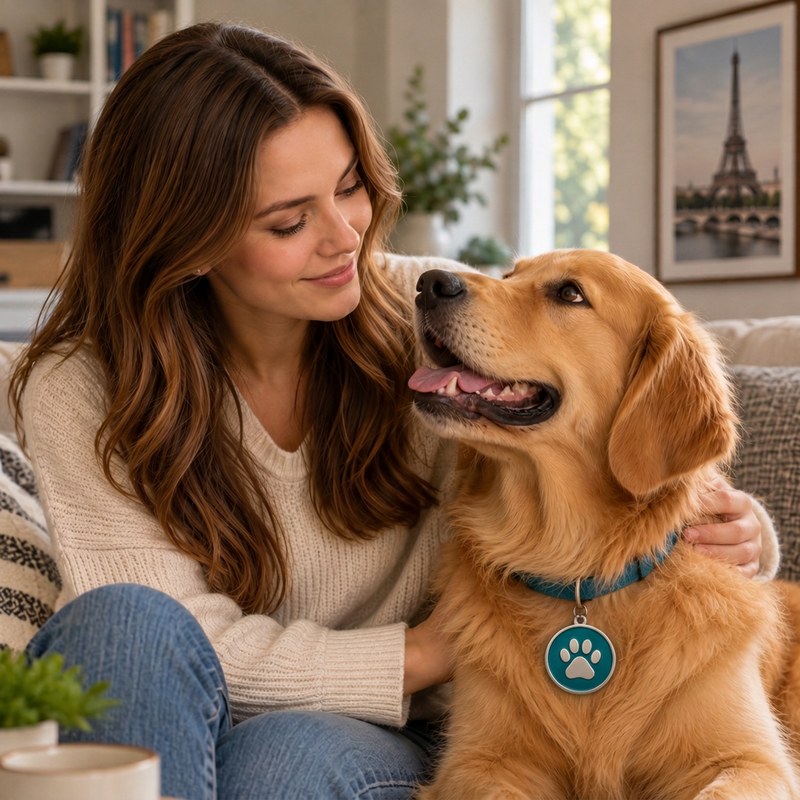
Dog lover and devoted owner of a Golden Retriever named Poki, sharing what she has learned raising him with kind, positive methods. Learn more about Milica.