A good walk is one of the great joys of having a dog. A walk spent being dragged down the street by a pulling, lunging puppy is one of the great frustrations. The difference between the two comes down to leash training, and the good news is that it is a skill any owner can teach with patience and the right approach.
Leash training a puppy is about far more than stopping them pulling. It teaches your puppy to walk calmly beside you, to pay attention to you around distractions, and to see the leash as a normal, positive part of life rather than something scary or exciting. Start early, keep it positive, and you set the foundation for years of pleasant walks together. Here is how to do it step by step.
Start Indoors, Before You Ever Hit the Street
The most common mistake owners make is taking a brand new puppy straight out onto a busy street and expecting them to walk nicely. The outside world is overwhelming, full of smells, sounds, and sights, and it is far too much to learn a new skill in. Begin at home instead.
First, let your puppy simply get used to wearing a collar or harness indoors. Pop it on for short periods during playtime and meals so they associate it with good things, and let them wear it until they barely notice it is there. Some puppies scratch at it or freeze up at first, which is normal, so keep these early sessions short and happy.
Once your puppy is comfortable in their collar or harness, attach the leash and let them drag it around indoors under your supervision. This gets them used to the feeling of something trailing behind them before you ever pick up the other end. Never leave a puppy unattended with a trailing leash, but a few supervised minutes here makes the next steps much easier.
Teach Your Puppy That Being Near You Pays
Before you worry about walking in a straight line, teach your puppy the single most important lesson in leash training: good things happen when you are close to me. This is the heart of loose-leash walking.
With the leash on indoors, hold some treats and simply reward your puppy every time they come near your side or look up at you. You are not asking for anything fancy yet, just paying them for choosing to be near you. Take a step, and if your puppy follows, reward. Over many little repetitions, your puppy learns that staying close to your leg is the most rewarding place to be, which is exactly the habit you want on a real walk.
Choose Your Side and Your Cue
Decide which side you want your puppy to walk on and try to be consistent, as this helps them learn where their spot is. Many people choose the left, but either is fine. You can add a cue like “let’s go” or “with me” as you start moving, so your puppy has a clear signal that it is time to walk together.
Reward your puppy generously for being in the right position beside you. In the early days, you may be treating almost constantly, and that is exactly right. You are paying well for a brand new skill, and you will fade the treats gradually as your puppy gets the hang of it.
The Golden Rule for Stopping Pulling
Here is the technique that changes everything, and it requires real consistency to work. The moment your puppy pulls and the leash goes tight, stop walking. Become a tree. Do not yank back, do not scold, simply stop and stand still.
Your puppy learns a powerful lesson: pulling gets them nowhere. Wait for the leash to loosen, which usually happens when your puppy turns to see why you stopped or steps back toward you. The instant there is slack in the leash, praise them and start walking again. Forward motion is the reward, and it only happens when the leash is loose.
This will feel slow at first. You may only travel a few steps at a time, and your first “walks” might barely leave your garden. Stick with it. Every single time you allow pulling to move you forward, you teach your puppy that pulling works, so consistency from everyone who walks the puppy is what makes this click.
Add Distractions Gradually
Once your puppy walks nicely indoors and in the garden, slowly raise the difficulty. Move to a quiet part of the street at a calm time of day before you tackle anywhere busy. Every new environment brings new distractions, and your puppy may seem to forget everything they knew the moment a leaf blows past. That is completely normal.
When distractions appear, go back to rewarding heavily for attention and for staying close. Bring higher-value treats to harder environments, because you are competing with some very exciting smells and sights. As your puppy gets better at focusing around distractions, you can gradually reduce how often you treat, but keep rewarding good walking regularly so the habit stays strong.
Keep Sessions Short and Positive
Puppies have short attention spans and tire quickly, both physically and mentally. Short, frequent, upbeat sessions beat long, frustrating ones every time. If you or your puppy are getting frustrated, stop, take a break, and come back to it later. Leash training should feel like a pleasant part of your day, not a battle of wills.
Remember too that a puppy who has had some of their energy out is far easier to train than a bouncing bundle of pent-up excitement. A little playtime before a training walk can make a real difference to how well your puppy focuses.
A Few Common Mistakes to Avoid
Steer clear of these and your leash training will go far more smoothly. Do not use the leash to yank or drag your puppy, as this creates fear and resistance rather than cooperation. Do not let your puppy pull you to something they want, like another dog or an exciting smell, because that teaches them pulling works. Do not rush to busy environments before the basics are solid. And do not expect perfection quickly, since loose-leash walking is one of the harder skills for a dog to truly master, and it develops over weeks and months, not days.
Building on Your Progress
Leash training does not happen in isolation. It works best as part of your puppy’s wider training routine, alongside the other foundations you are building in those early weeks. A puppy who is learning to focus on you, respond to their name, and settle calmly will find leash walking much easier, because the underlying attention skills are shared. If you are working through the bigger picture of raising a well-behaved puppy, our dog training plan shows you how all these pieces fit together in a sensible order.
The Bottom Line
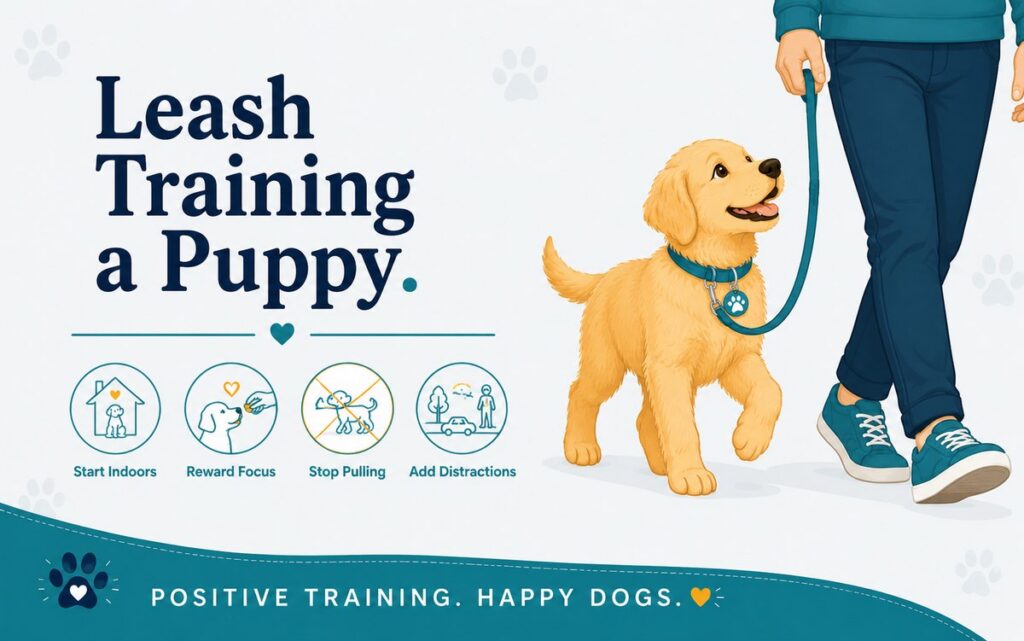
Leash training a puppy comes down to starting indoors, teaching your puppy that staying close to you pays, and then following the golden rule without fail: a tight leash stops the walk, a loose leash keeps it going. Add distractions gradually, keep every session short and positive, and resist the urge to rush. It takes patience, and there will be slow walks and frustrating days, but the payoff is enormous. Put in the work now while your puppy is young, and you will enjoy years of calm, happy walks side by side.