Most people train their dog in scattered bursts. A little “sit” practice one day, a forgotten week, a sudden panic about leash pulling the next. It works eventually, sort of, but it is slow and frustrating for both of you. There is a better way, and it is not about training harder. It is about training with a plan.
A structured dog training plan takes the guesswork out of the process. Instead of wondering what to work on today, you follow a clear sequence that builds skills in a logical order. Your dog learns faster because the lessons connect, and you stay motivated because you can actually see progress. This guide shows you how to build a training plan that works, whether you have a brand new puppy or an adult dog with a few rough edges.
Why a Plan Beats Random Practice
Dogs learn best through consistency and repetition, and a plan delivers both. When you train the same skills in a predictable order, each lesson reinforces the last. “Sit” becomes the foundation for “stay,” which becomes the foundation for polite greetings, which feeds into calm behavior around guests. Skills stack.
A plan also solves the motivation problem. Training a dog is a marathon, and it is easy to lose steam when you cannot tell whether you are making progress. A clear plan gives you small, visible wins along the way, which keeps you showing up. And showing up consistently, even for just a few minutes a day, is what actually changes behavior.
The Building Blocks of a Good Training Plan
Every effective plan shares a few core features. Keep these in mind whether you follow a ready-made plan or build your own.
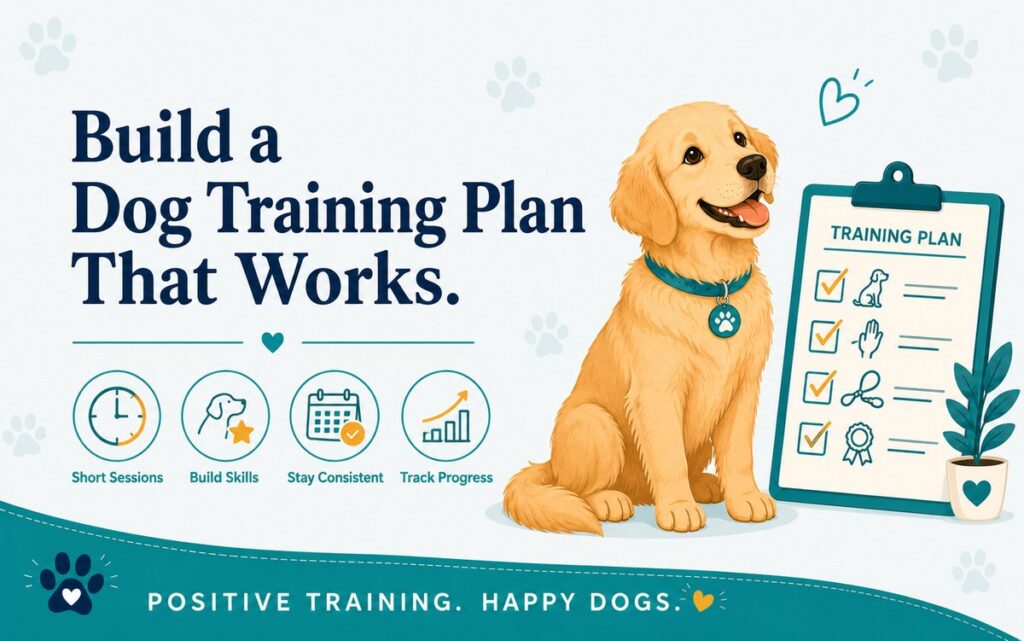
Sessions should be short and frequent. Two or three sessions of five to ten minutes each day beat one long, exhausting session every few days. Dogs, especially young ones, have short attention spans, and ending while they are still keen makes them eager for the next round.
Skills should build in a logical order, starting with the simplest foundations and progressing toward harder challenges. You teach a behavior in a quiet room first, then slowly add distractions, distance, and duration. This gradual layering is what makes a skill reliable in the real world rather than just in your kitchen.
And everything runs on positive reinforcement. You reward what you want, ignore or redirect what you do not, and keep the whole experience upbeat. A dog who enjoys training learns faster and remembers longer.
A Simple Framework to Follow
Here is a straightforward way to think about sequencing your training over the first several weeks. The exact pace depends on your dog, so move faster or slower as needed.
Foundations First
Begin with the core building blocks: your dog’s name and attention, plus “sit.” These are quick wins that teach your dog the game of training itself, that paying attention to you leads to good things. Getting reliable eye contact on cue is worth more than it sounds, because attention is the doorway to every other skill.
Core Commands
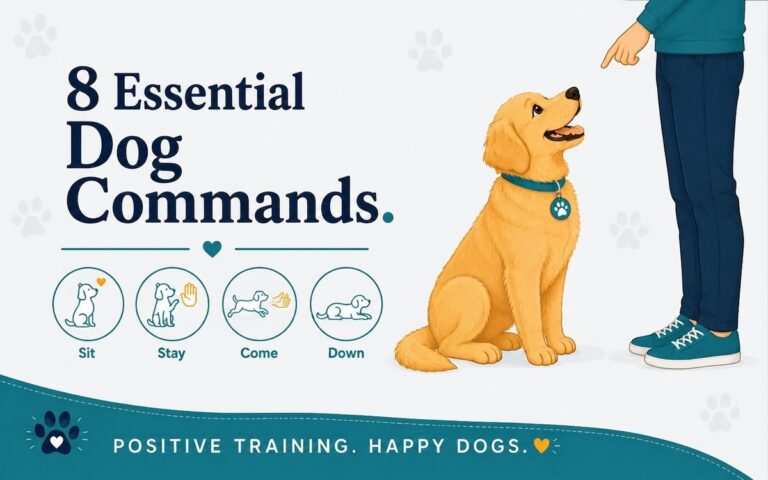
Next, layer in the essential obedience cues: “down,” “stay,” and “come.” Recall in particular deserves ongoing attention because it is a genuine safety skill. Practice these in easy settings first, then gradually raise the difficulty by adding mild distractions. As your dog masters the spoken cues, it is worth teaching the matching hand signals too, so you can communicate at a distance or in noisy places.
Manners and Real Life
With the foundations in place, move into the behaviors that make daily life pleasant: loose-leash walking, polite greetings without jumping, settling calmly, and “leave it.” These are the skills that turn a trained dog into a genuinely good companion to live with. Loose-leash walking in particular is worth its own focused effort, which our guide to leash training a puppy walks through step by step.
Proofing and Distractions
Finally, take everything your dog knows and practice it in harder and harder environments. A “sit” that holds in a busy park, a recall that works when a squirrel darts by. This proofing stage is what separates a dog who knows commands from a dog who obeys them when it counts.
How to Keep Yourself on Track
The hardest part of any training plan is not the training itself. It is staying consistent day after day. A few simple habits make all the difference.
Tie your training sessions to something you already do, like practicing for a few minutes before your dog’s meals or after a walk. Keep treats stashed where you will see them as a reminder. And track your progress somehow, even just a quick note on which skills are solid and which need work, so you always know what to focus on next.
Tracking matters more than people expect. When you can look back and see how far your dog has come, the inevitable slow days feel less discouraging. Progress you can see is progress you will stick with.
Adjusting the Plan to Your Dog
No plan is one-size-fits-all. A young puppy needs shorter sessions and more focus on the basics like potty training and socialization. An adult dog might move through foundations quickly but need extra time unlearning an established bad habit. A rescue dog with an unknown history may need you to go slower and build trust first, particularly if they show signs of reactivity.
Watch your dog and let them set the pace. If a skill is not clicking, break it into smaller steps. If your dog is breezing through, add difficulty sooner. The plan is a guide, not a rigid rulebook, and the best trainers adapt it to the dog in front of them.
The Value of a Ready-Made Plan
You can absolutely build your own plan from scratch, and this guide gives you the framework to do it. But many owners find it far easier to follow a plan someone has already mapped out, especially in those overwhelming early weeks with a new puppy when there is a hundred things to remember at once.
A good ready-made plan lays out what to work on and when, so you can simply follow along instead of designing the whole thing yourself. If that sounds helpful, we put together a printable puppy training checklist that organizes the early essentials, from house training to socialization to the core commands, into one clear, follow-along resource. You can take a look at the puppy training checklist here. It is an affordable paid download, and picking up a copy also helps support the free training guides we share here on Paws Applaws.
The Bottom Line
A dog training plan turns scattered, frustrating practice into steady, visible progress. Keep sessions short and frequent, build skills in a logical order from foundations to real-world proofing, run everything on positive reinforcement, and track your progress so you stay motivated. Whether you map out your own plan or follow a ready-made one, the simple act of having a plan is what gets you to a calm, confident, well-behaved dog. Start small, stay consistent, and enjoy watching your dog grow into the companion you always hoped for.