Picture this. You are on a walk and your dog lunges toward something on the pavement, a chicken bone, a discarded wrapper, something you really do not want in their mouth. In that split second, two little commands can make all the difference: “leave it” if they have not grabbed it yet, and “drop it” if they already have. These are not fancy tricks. They are genuine safety skills that every dog should know.
People often mix these two up, but they do different jobs, and teaching both gives you a complete toolkit for keeping your dog safe. Leave It means do not touch that in the first place. Drop It means let go of what is already in your mouth. Together they cover almost every risky situation, from dropped medication at home to something rotten on the trail. This guide shows you how to teach both, step by step, using kind, reward-based methods.
Leave It vs Drop It: What’s the Difference?
It is worth being clear on this from the start, because teaching them as two distinct cues keeps your dog from getting confused. Leave It is about prevention. You use it when your dog notices something but has not picked it up yet, telling them to ignore it and leave it alone. Drop It, sometimes called Give, is about release. You use it when the item is already in your dog’s mouth and you need them to let go.
Think of Leave It as the earlier line of defense and Drop It as the backup for when Leave It came too late. A dog who knows both is remarkably safe, because you have a tool for both stages of the situation.
Why the Kind Method Matters Here
There is a real temptation, especially with Drop It, to just pry your dog’s mouth open or chase them down and force the item out. Please resist it. Forcing things creates two serious problems.
First, it can teach your dog to guard their prizes. If grabbing something means a human is going to wrestle it away, a dog learns to run off, gulp it down fast, or even growl to keep it. That is the opposite of what you want. Second, chasing a dog who has grabbed something often turns into a thrilling game of keep-away from their point of view, which makes the behavior more likely, not less. The reward-based approach avoids both traps by making your dog want to cooperate.
How to Teach Leave It
We will start with Leave It, working up in stages from easy to hard. Do not rush ahead until your dog is reliable at each stage.
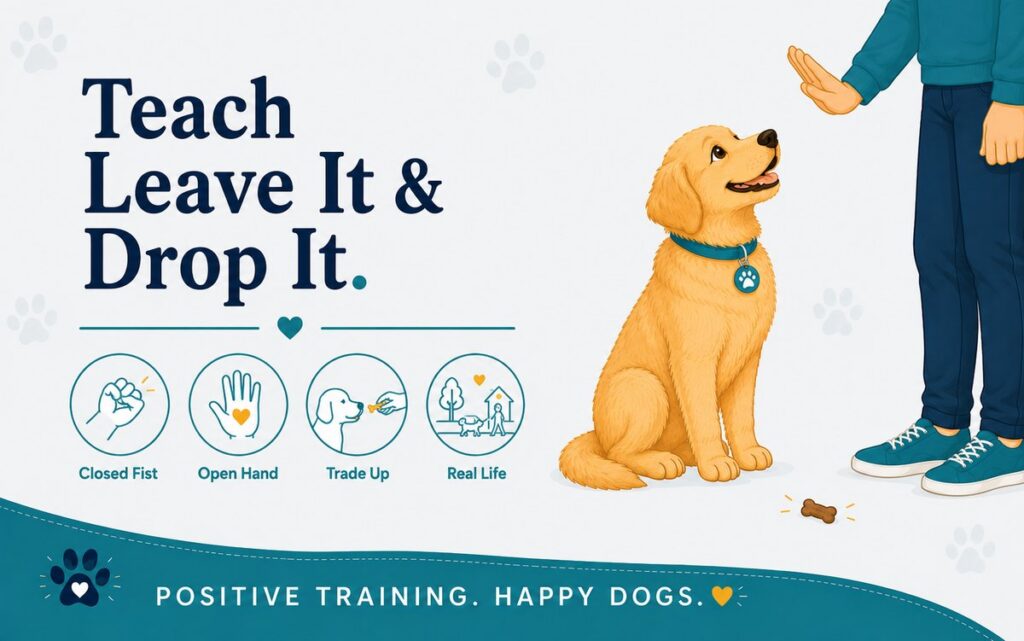
Stage 1: The Closed Fist
Put a treat in your closed fist and let your dog sniff, lick, and paw at your hand. Say “leave it” once, then simply wait. Do not open your hand. The moment your dog gives up and backs away or looks away, even for a second, say “yes” and reward them with a different treat from your other hand. The crucial detail is that the reward never comes from the hand you told them to leave. They learn that ignoring the first thing earns something even better from elsewhere.
Stage 2: The Open Hand
Once your dog reliably backs off the closed fist, try it with your palm open and the treat visible. If they go for it, simply close your hand. When they hold back after you say “leave it,” mark with “yes” and reward from your other hand. This is harder because the temptation is right there in view, so take your time.
Stage 3: On the Floor
Now place a treat on the floor and cover it with your hand, saying “leave it.” Uncover it slowly as your dog learns to hold back, always ready to cover it again if they dive in. Reward from your hand, not from the floor. Gradually work up to leaving the treat uncovered on the floor while your dog leaves it on cue.
Stage 4: Real Life
Finally, practice with more tempting items and out on walks, where the real payoff happens. Keep rewarding heavily when your dog leaves something on cue in the real world, because that is a genuinely hard ask and deserves great pay. Over time, Leave It becomes an automatic response you can rely on.
How to Teach Drop It
Drop It is best taught as a happy trade, never a battle. The whole idea is to make letting go feel rewarding rather than like a loss.
Start With a Trade
Give your dog a toy they like but are not obsessed with. Once they have it, hold a tasty treat near their nose and say “drop it.” Most dogs will open their mouth to take the treat, letting the toy fall. The instant the toy drops, say “yes” and give the treat. You have just traded the toy for something good, with no force involved.
Give the Item Back
Here is a step people often skip, and it matters enormously. After your dog drops the toy and gets their treat, often give the toy straight back. This teaches your dog that dropping something does not mean losing it forever. That single lesson prevents guarding, because your dog stops feeling like they have to protect their things from you. Trading and returning turns Drop It into a game they are happy to play.
Build Up the Difficulty
As your dog gets the idea, practice with more exciting toys and eventually with items they really value. Always trade up, offering something at least as good as what they are giving. If your dog has grabbed something genuinely valuable to them, a higher-value treat or a favorite toy makes the trade appealing enough to win their cooperation.
Practice Makes These Reliable
Both commands need practice in different places and with different items before you can truly count on them. A dog who drops a toy in the living room may not drop a fascinating stick at the park without practice. Work these into everyday life. Ask for a Leave It when you drop something in the kitchen, a Drop It during a game of fetch. The more your dog rehearses them in calm, low-stakes moments, the more reliable they become when it really counts.
Keep rewarding, even occasionally, long after your dog seems to have mastered these. Because they are safety commands, they are worth maintaining for life rather than assuming the job is done. Having genuinely motivating treats on hand makes all of this easier, and our guide to choosing the best training treats covers what to look for.
When to Get Extra Help
If your dog already guards food, toys, or found objects, growling or stiffening when you approach, take extra care. Resource guarding is common and usually very manageable, but it is best addressed carefully, and in stronger cases with the guidance of a qualified, reward-based trainer or behaviorist. Never punish a growl, since a growl is useful communication, and punishing it can lead a dog to skip the warning next time. Trading up, as described above, is the foundation of turning guarding around, but do not hesitate to bring in a professional for anything beyond mild.
The Bottom Line
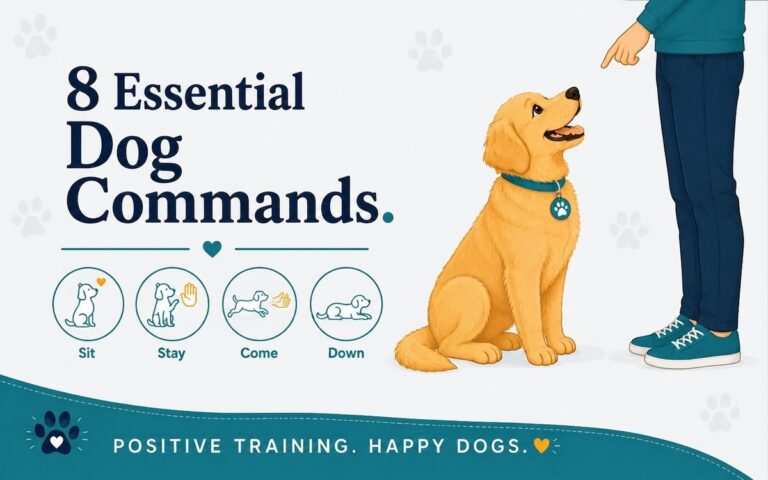
Leave It and Drop It are two of the most valuable safety commands you can teach, and together they cover both stopping your dog before they grab something and getting them to release something they already have. Teach Leave It in easy stages from a closed fist up to real-world temptations, and teach Drop It as a happy trade where letting go always earns something good, often including the item back. Practice both in different places, keep them rewarding for life, and you will have a dog you can keep safe with a single calm word. Both Leave It and Drop It are part of the wider set of essential dog commands every dog should know. Grab some treats and a toy, and start with whichever one your dog needs most.