Bringing home a new puppy is pure joy right up until the first puddle appears on your living room floor. Potty training is the challenge almost every new dog owner worries about most, and for good reason: it can feel messy, confusing, and slow. But here is the reassuring truth. Potty training is not complicated. It is about consistency, timing, and a schedule your puppy can rely on.
Dogs are creatures of habit, and their bodies respond to routine. When you take your puppy out at predictable times and reward them in the right spot, the lesson clicks faster than most people expect. This guide walks you through why a schedule works, what a good potty routine looks like, and how to handle the bumps along the way.
Why a Schedule Is the Secret
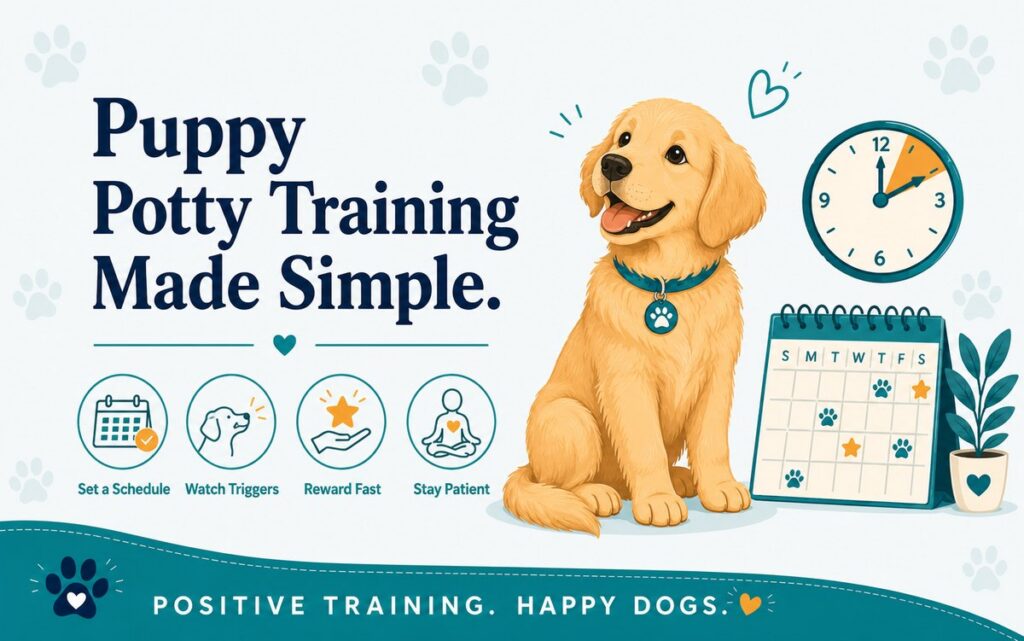
Puppies do not yet have full control over their bladders, and they do not understand that indoors is off limits until we teach them. A consistent schedule solves both problems at once. By taking your puppy out at regular, predictable times, you dramatically increase the odds that they will go in the right place, which gives you the chance to reward them and build the habit.
Timing is everything because a puppy’s body is fairly predictable. They almost always need to relieve themselves after certain activities, and if you learn those trigger moments, you can be one step ahead instead of cleaning up behind. Get the timing right and accidents drop quickly.
The Golden Rule: Take Them Out After Every Trigger
There are a handful of moments when a puppy almost certainly needs to go. Learn these and build your day around them.
Take your puppy out first thing in the morning, the moment they wake up. Take them out after every meal and after they drink a good amount of water. Take them out after they wake from any nap, after a play session, and right before bed. And in the early weeks, take them out roughly every one to two hours in between, because young puppies simply cannot hold it very long.
A rough guideline many owners use is that a puppy can hold their bladder for about one hour per month of age, so a two-month-old puppy needs a break at least every couple of hours. This is only a guideline, and every puppy is different, but it helps you plan.
A Sample Daily Potty Schedule
Here is what a typical day might look like for a young puppy. Adjust the timing to fit your own schedule and your puppy’s age, but keep the pattern consistent.
First thing in the morning, take your puppy straight outside before anything else. After breakfast, head out again. Through the morning, offer a potty break every hour or two, and always after naps and play. Take them out after lunch, continue the regular breaks through the afternoon, and go out again after dinner. Offer one more break in the evening, then a final trip right before bed. Many young puppies will also need at least one overnight break in the early weeks, so do not be surprised by a middle-of-the-night alarm.
The exact clock times matter less than the consistency. Your puppy’s body will start to anticipate the routine, and that anticipation is what builds reliable habits.
The Right Way to Reward
When your puppy goes potty in the correct spot, reward them immediately and enthusiastically, right there outside. Timing is critical: the reward needs to come within a second or two of them finishing so they connect the treat and praise to the act of going in the right place. If you wait until you are back inside, the lesson is lost, because your puppy will not link the reward to what they did outdoors.
Take your puppy to the same general spot each time. The lingering scent helps signal that this is the bathroom area, and the familiarity speeds things up. Bring a small, high-value treat outside with you so you are ready the instant they finish. Praise in a warm, happy voice and make it a celebration. Your puppy wants to please you, and clear, immediate rewards tell them exactly how.
Handling Accidents the Smart Way
Accidents will happen, and how you respond makes a real difference. The most important rule: never punish your puppy for an accident, especially after the fact. A puppy cannot connect a scolding to something they did minutes ago, and punishment only teaches them to fear you or to hide when they need to go, which makes everything harder.
If you catch your puppy in the act, calmly interrupt with a gentle sound and take them straight outside to finish, then reward them for completing in the right spot. If you find an accident after the fact, simply clean it up and move on. Use an enzyme-based cleaner made for pet messes, because regular cleaners leave scent markers that invite your puppy to use the same spot again.
Most accidents are really information for you. They usually mean a potty break was missed or the schedule needs tightening, not that your puppy is being defiant. Treat each one as a nudge to adjust, not a reason to be frustrated.
The Role of Crate Training and Supervision
Two tools make potty training dramatically easier: supervision and a properly sized crate or safe space. Potty training also fits inside your dog’s wider training plan, so it helps to think of it as one piece of the bigger routine rather than a separate battle. Dogs naturally avoid soiling where they sleep, so a correctly sized crate, one just big enough for your puppy to stand, turn around, and lie down, encourages them to hold it until you take them out. The crate becomes a helpful ally, never a punishment. For the full step-by-step, see our guide to crate training a puppy.
When your puppy is not crated, keep them under close watch. Many owners tether the puppy to themselves or keep them in the same room so they can spot the early signs, like sniffing, circling, or suddenly wandering off. Catching those signals lets you whisk your puppy outside before an accident happens, turning a near miss into a training win.
Staying Patient Through the Process
Potty training rarely follows a perfectly straight line. Some days feel like a breakthrough, others feel like a step back, and that is completely normal. Younger puppies take longer simply because their bodies are still developing control. Most puppies get largely reliable within a few weeks to a couple of months of consistent effort, though full reliability can take longer.
The owners who succeed fastest are the ones who stay consistent and keep their cool. Every correct trip outside is a deposit in the bank, and those deposits add up faster than the occasional accident sets you back. Trust the routine, celebrate the wins, and know that this messy phase really is temporary.
Keeping It All Straight
In those first busy weeks, it is genuinely hard to remember when your puppy last ate, drank, napped, and went outside, especially when you are running on little sleep. Tracking the routine on paper or a simple chart takes the guesswork out of it and helps everyone in the household stay on the same page.
If you would like a ready-made head start, we put together a printable puppy training checklist that lays out potty schedules, crate training, socialization, and the early basics in one simple place, so you are not trying to hold it all in your head. You can find the puppy training checklist here. It is a small paid resource, and grabbing a copy also helps support the free guides we publish here on Paws Applaws.
The Bottom Line
Potty training comes down to a reliable schedule, good timing around your puppy’s natural triggers, immediate rewards in the right spot, and calm patience when accidents happen. Take your puppy out often, celebrate every success, skip the punishment, and lean on supervision and a properly sized crate to set them up to win. Stick with the routine and you will be amazed how quickly your puppy figures it out. This stage passes, and a well-trained, happy dog is waiting on the other side.