If your dog barks, lunges, or spins at the end of the leash the moment another dog appears, you already know how lonely and stressful it feels. You start scanning the street before every walk. You cross the road to avoid other people. You wonder what you did wrong. Here is the first thing you need to hear: a reactive dog is not a bad dog, and you are not a bad owner.
Reactivity is one of the most common and most misunderstood behavior challenges dog owners face. The good news is that with patience and the right approach, most reactive dogs improve a great deal. This guide explains what reactivity actually is, why it happens, and the practical, positive steps you can take to help your dog feel calmer in the world.
What Reactivity Actually Is
A reactive dog overreacts to something in their environment, usually other dogs, people, cars, bikes, or fast movement. The reaction often looks dramatic: barking, lunging, growling, or pulling hard toward or away from the trigger. Because it can look aggressive, reactivity is frequently confused with aggression, but they are not the same thing.
Most reactivity is rooted in emotion rather than a desire to do harm. The two biggest drivers are fear and frustration. A fearful dog reacts to create distance, essentially shouting “go away” because the trigger scares them. A frustrated dog, often an under-socialized or over-excited one, reacts because they desperately want to get to the other dog or person and cannot. Understanding which one you are dealing with changes how you help.
Why Punishment Makes Reactivity Worse
The instinct when a dog explodes on the leash is to correct it, to yank, scold, or use a tool that causes discomfort. This almost always backfires. If your dog is already scared or overwhelmed, adding pain or fear on top teaches them that the trigger predicts bad things, which deepens the very emotion driving the reaction.
Worse, punishment can suppress the warning signs without changing the underlying feeling. A dog that learns not to growl or bark may skip straight to biting next time, because you removed their way of saying “I am uncomfortable.” The kinder and more effective path is to change how your dog feels about the trigger, not just how they act.
The Foundation: Distance and Threshold
The single most important concept in reactive dog training is threshold. Your dog’s threshold is the point at which they tip from noticing a trigger to reacting to it. Below threshold, your dog can see the other dog but still think, eat a treat, and respond to you. Above threshold, the emotional brain takes over and no learning happens.
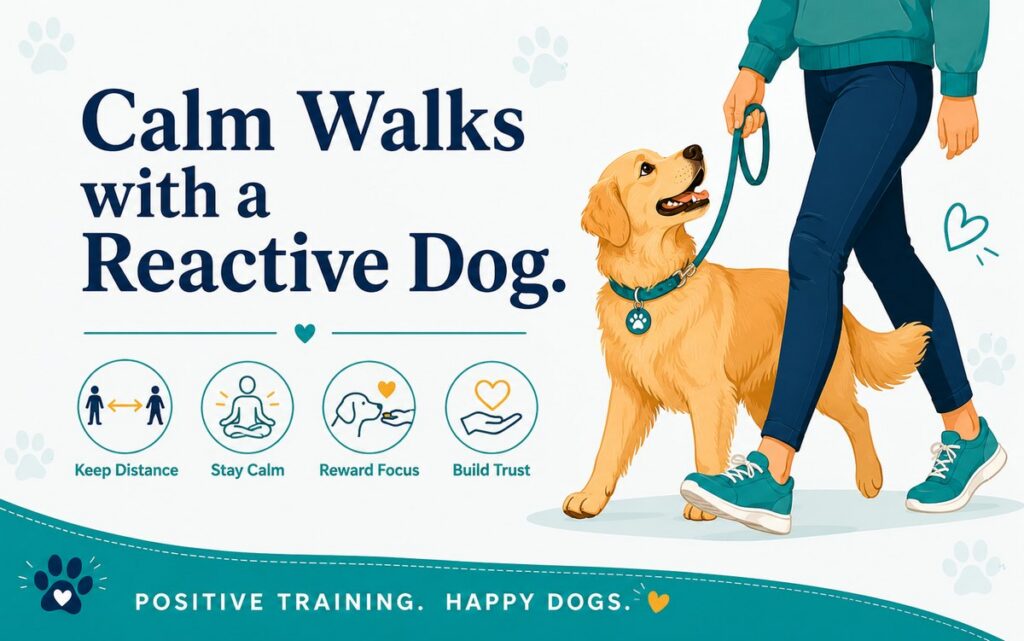
Almost all reactive training happens below threshold, and distance is your main tool for staying there. If your dog reacts to another dog at twenty feet, you work at thirty or forty feet where they can stay calm. As they improve, you slowly close the gap. Trying to train while your dog is already melting down is like trying to teach math to someone who is panicking. First you lower the intensity, then you teach.
Practical Techniques That Work
Engage and Disengage
This simple game rewires how your dog feels about triggers. At a safe distance, wait for your dog to notice the trigger. The instant they look at it, mark that moment with a cheerful word like “yes” and give a treat as they turn back to you. You are teaching two things at once: that the trigger predicts good things, and that checking in with you pays off. Over many repetitions, your dog starts to see a trigger and automatically look to you for their reward.
Find the Reward Zone
Keep high-value treats ready and reward your dog generously for calm behavior near triggers, even calm behavior you did not ask for. Reactive work is exactly where a genuinely motivating reward earns its keep, so it is worth choosing a high-value training treat your dog will work for under pressure. If your dog glances at another dog and then chooses to keep walking, that is a huge win worth rewarding. You are building a new default response: stay calm, get paid.
The Emergency U-Turn
Sometimes a trigger appears out of nowhere and you need to get out fast before your dog goes over threshold. Teach a happy, upbeat turn-and-go cue at home first, using a phrase like “let’s go” followed by a treat as you move away together. Practiced enough, it becomes an automatic escape hatch you can use anywhere, and it prevents the failed reps that set training back. Pairing the cue with a clear hand signal makes it even easier to communicate at a distance, when your dog may not hear you over the noise.
Move, Do Not Freeze
When owners spot a trigger, they often freeze and stare, which telegraphs tension straight down the leash. Instead, keep moving calmly, breathe, and create distance smoothly. Your body language matters more than you think, and a relaxed handler helps produce a relaxed dog.
Set Up the Environment for Success
Every time your dog goes over threshold and has a full reaction, it reinforces the pattern and sets your progress back. So a big part of reactive training is management, meaning you arrange life to avoid those explosions while your dog learns.
Walk at quiet times of day when you will meet fewer triggers. Choose open spaces where you can create distance rather than tight sidewalks with no escape. Use a comfortable harness that gives you control without causing pain. Cross the street early, put parked cars between you and an approaching dog, and do not feel embarrassed about it. You are not avoiding forever, you are protecting your dog’s learning while their new skills are still fragile.
Managing Your Own Emotions
Reactive dog training is as much about the human as the dog. It is genuinely exhausting to feel judged on every walk, and your stress travels straight down the leash. Give yourself permission to have hard days. Progress with reactivity is rarely a straight line, and a bad walk does not erase your work.
Celebrate the small wins, because they are the real markers of progress. A slightly shorter reaction, a faster recovery afterward, a moment where your dog looked at a trigger and then back at you. These little victories add up to a dog who can move through the world with far less fear.
When to Call in a Professional
Many reactive dogs improve with consistent, patient owner training. But if your dog’s reactivity involves genuine aggression, has resulted in bites, or simply feels like more than you can manage alone, please reach out to a qualified, reward-based trainer or a veterinary behaviorist. This is not failure, it is smart. A good professional can assess your specific dog in person and build a plan tailored to them, and in some cases they may work with your vet to rule out pain or medical causes.
The Long View
Helping a reactive dog is a marathon, not a sprint. You are not trying to create a dog who loves every other dog on earth. You are helping a dog who feels overwhelmed learn that they are safe, that you have their back, and that the scary thing predicts good things instead of bad. That is a gift, and it deepens the bond between you in a way few things can.
Go slow, stay below threshold, reward generously, and be as patient with yourself as you are with your dog. Calmer walks are absolutely possible, and every small step forward is one worth celebrating.