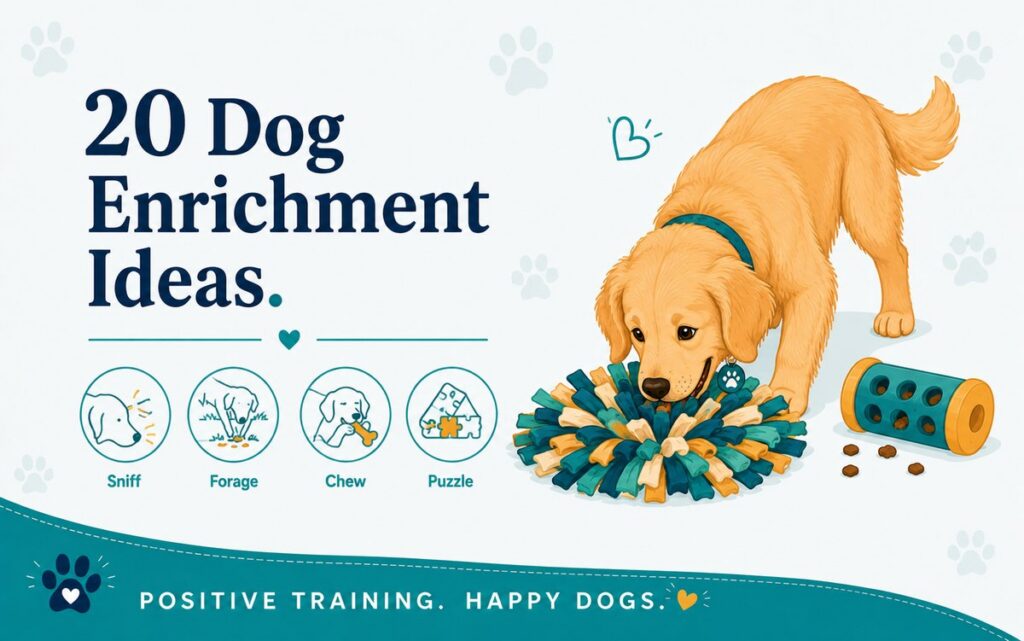
Here is something most dog owners discover the hard way: a bored dog is a destructive dog. That chewed shoe, the endless barking, the hole dug straight through your flower bed. Very often these are not behavior problems at all. They are boredom problems. And the fix is not more discipline, it is more enrichment.
Enrichment simply means giving your dog ways to use their brain and natural instincts. Dogs were bred to work, sniff, chew, forage, and solve problems, and a modern life of naps and short walks leaves a lot of that mental energy with nowhere to go. The good news is that tiring out your dog’s mind is often easier and faster than tiring out their body, and most enrichment ideas cost little or nothing. Here are twenty ways to keep your dog happily busy, starting with the simplest.
Why Enrichment Matters So Much
A ten-minute sniffing session can tire a dog out more than a half-hour walk. That is because using the nose and brain is genuinely hard work for a dog, the mental equivalent of a workout. When you give your dog regular outlets for that energy, a lot of common problems simply fade away.
Enrichment reduces boredom-based behaviors like destructive chewing, digging, and excessive barking. It lowers stress and anxiety by giving nervous dogs something calming to focus on. It builds confidence in shy dogs as they solve little puzzles and succeed. And it deepens your bond, because you become the source of all the fun. Think of enrichment not as a luxury but as a basic need, right alongside food, exercise, and love.
Food and Foraging Enrichment
The easiest place to start is with food, because your dog is already motivated by it. Instead of serving meals in a plain bowl, make your dog work for them.
1. Scatter Feeding
The simplest enrichment of all. Instead of using a bowl, scatter your dog’s kibble across the lawn or over a towel and let them sniff it out piece by piece. This turns a thirty-second meal into a ten-minute foraging session that taps straight into their natural hunting instinct.
2. The Muffin Tin Puzzle
Drop a few treats into the cups of a muffin tin, then cover every cup with a tennis ball. Your dog has to nudge and lift each ball to find the reward underneath. It is a free puzzle made from things you already own.
3. The Towel Roll
Lay a towel flat, sprinkle treats along it, then roll it up loosely. Your dog gets to unroll and unpack the whole thing to find their prizes. For a harder version, tie a loose knot in the towel first.
4. A Stuffed Rubber Toy
Hollow rubber toys are an enrichment classic for a reason. Stuff one with a mix of your dog’s food, a little plain yogurt, or mashed banana, and let them work at it. For a longer-lasting challenge, freeze it first so it takes even more time and effort.
5. The Cardboard Box Dig
Fill a cardboard box with scrunched-up paper, old towels, or packing paper, then hide treats throughout. Your dog gets to dig, rummage, and shred to their heart’s content, satisfying that digging urge somewhere that is actually allowed.
6. Frozen Treats
On a warm day, freeze some low-sodium broth in an ice tray, or freeze a rubber toy stuffed with dog-safe goodies. A frozen enrichment treat keeps your dog cool and busy at the same time.
Sniffing and Nosework Enrichment
Your dog’s sense of smell is their superpower, thousands of times stronger than ours. Letting them use it is one of the most satisfying things you can offer.
7. The Snuffle Mat
A snuffle mat is a fabric mat full of folds and pockets where you hide kibble. Your dog snuffles through the material to find every last piece. You can buy one or make your own from a rubber sink mat and strips of fleece.
8. The Find It Game
Start easy by tossing a treat and saying “find it.” Once your dog gets the idea, have them wait while you hide treats around the room, then release them to search. This simple game is endlessly expandable and works rain or shine.
9. Hide and Seek
Have your dog stay, then go hide somewhere in the house and call them to find you. It builds their recall, gives them a nosework challenge, and it is genuinely fun for both of you.
10. The Sniffari Walk
Once in a while, let your walk be entirely about sniffing rather than distance. Follow your dog’s nose and let them stop and investigate whatever they like for as long as they like. A slow, sniff-led walk is deeply enriching even if you barely cover any ground.
11. Scatter in the Grass
Toss a handful of treats or kibble into longer grass and let your dog hunt them down. The uneven ground and hidden rewards make it a wonderful natural puzzle.
Chewing and Instinct Enrichment
Chewing is a natural, stress-relieving behavior for dogs, not something to stamp out. The trick is giving them appropriate outlets.
12. Long-Lasting Chews
Offer a safe, long-lasting chew appropriate for your dog’s size and chewing style. Chewing releases feel-good endorphins and can calm an anxious or restless dog remarkably well. Always supervise and choose the right chew for your individual dog.
13. A Dig Box
If your dog loves to dig, give them a place where it is allowed. A small sandpit or a large container filled with soil or sand, with toys and treats buried inside, redirects that instinct away from your garden beds.
14. Puzzle Feeders and Toys
Commercial puzzle toys ask your dog to slide, flip, and lift compartments to release food. They come in different difficulty levels, so you can start easy and work up as your dog gets cleverer.
Training and Brain-Game Enrichment
Learning is enrichment too. Teaching your dog new things gives their brain a proper workout and strengthens your relationship.
15. Teach a New Trick
Spin, bow, wave, or roll over. Learning any new trick is mentally tiring in the best way. Keep sessions short and rewarding, and enjoy watching your dog figure it out. For a full walkthrough, see our guide to easy dog tricks to teach your dog.
16. Name Their Toys
Teach your dog the names of their individual toys, then ask them to fetch a specific one. It sounds simple, but it is a genuine mental challenge and quietly impressive once they get good at it.
17. The Cup Game
Hide a treat under one of three cups, shuffle them, and let your dog use their nose and memory to find it. It is a classic problem-solving game that dogs adore.
18. Learn the Names of People
Teach your dog to go to a specific family member by name. “Go find Mum” becomes a fun challenge that combines nosework, recall, and listening all at once.
Environmental and Social Enrichment
19. A New Environment
Novelty is enriching in itself. Take your dog somewhere new, even just a different street or park. New sights, sounds, and smells give their brain plenty to process and can be a lovely change from the usual loop.
20. A Cardboard Playground
Never underestimate a pile of cardboard boxes. Arrange a few into tunnels and platforms, hide treats inside, and let your dog explore, climb, and shred. It is free, endlessly reusable, and dogs find it genuinely exciting.
How to Fit Enrichment Into Your Day
You do not need to do all twenty of these every day. The goal is variety and consistency, not exhaustion. Rotate a few ideas through the week so things stay novel, since the same puzzle every day slowly loses its shine. Swapping toys in and out of a cupboard, so your dog only sees each one occasionally, keeps them feeling fresh and exciting.
A good rhythm is to swap your dog’s bowl for a foraging activity at mealtimes, add a short sniffing or brain game most days, and offer a longer chew or frozen treat when you need your dog to settle. It takes only a few minutes to set up but buys you a calmer, more contented dog.
If your dog is highly food-motivated, many of these ideas double as a smart way to use their daily food allowance, so you are enriching their day without adding extra calories. Pairing enrichment with the right rewards makes it even more effective, and choosing a genuinely motivating treat helps. If you want a hand there, our guide to choosing the best training treats walks through exactly what to look for.
The Bottom Line
Enrichment is one of the kindest and most powerful things you can give your dog, and it solves far more behavior problems than most owners realize. A dog whose brain and instincts are satisfied is calmer, happier, and far less likely to chew, dig, or bark out of sheer boredom. Start with the simple ideas, watch which ones light your dog up, and build variety into your week. Mental exercise is not a treat you occasionally hand out, it is a need you get to meet, and meeting it well makes for a genuinely happy dog.