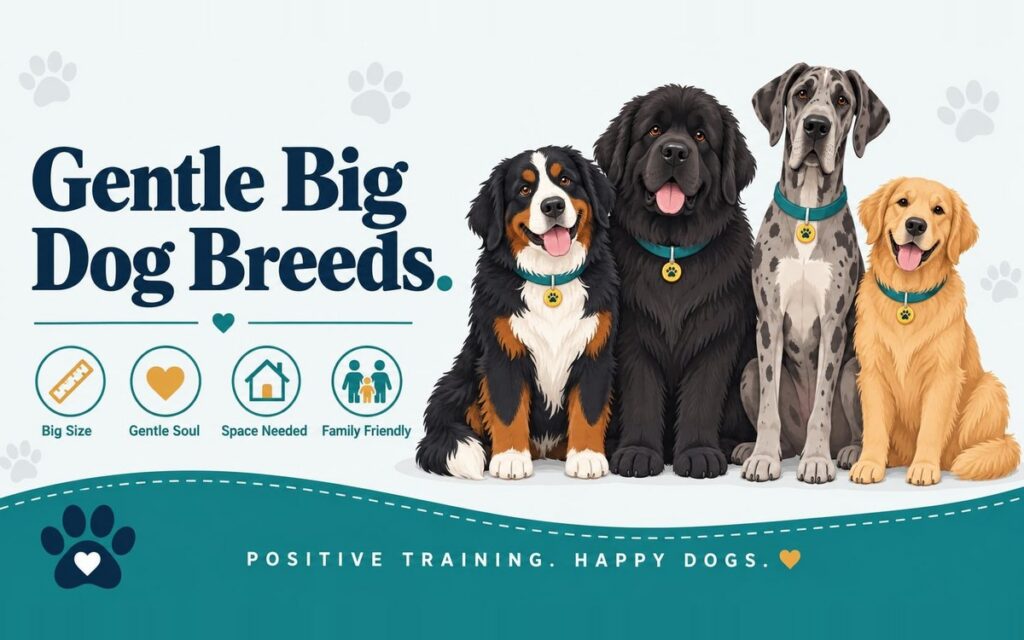
There is something special about a big dog. The way they lean their whole weight against your legs, the deep contented sighs, the sheer presence of them in a room. Many large breeds are famously gentle, patient with children, and calmer as adults than their size might suggest.
Living with a big dog also takes planning. They need more space, more food, and early training while they are still small enough to manage. Here are twelve big dog breeds known for being wonderful family companions, with an honest look at what each one needs. Weights are approximate adult ranges.
Big Dog Breeds at a Glance
| Breed | Approx. weight | Energy | Shedding |
|---|---|---|---|
| Labrador Retriever | 25 to 36 kg | High | Moderate to high |
| Golden Retriever | 25 to 34 kg | High | High |
| Bernese Mountain Dog | 32 to 52 kg | Moderate | High |
| Newfoundland | 45 to 68 kg | Low to moderate | High |
| Great Dane | 50 to 80 kg | Moderate | Moderate |
| Saint Bernard | 55 to 80 kg | Low to moderate | High |
| Leonberger | 41 to 77 kg | Moderate | High |
| Irish Wolfhound | 40 to 55 kg or more | Moderate | Moderate |
| Great Pyrenees | 36 to 54 kg or more | Low to moderate | High |
| Greyhound | 27 to 40 kg | Low indoors, bursts outdoors | Low |
| Standard Poodle | 18 to 32 kg | Moderate to high | Very low |
| Boxer | 25 to 32 kg | High | Low to moderate |
1. Labrador Retriever
Labradors are one of the most popular family dogs in the world for good reason. They are friendly, eager to please, and usually wonderful with children. They are also energetic, especially in their first few years, and need daily exercise and mental stimulation. Labs love food, so keep an eye on their weight.
2. Golden Retriever
Gentle, patient, and endlessly affectionate, Golden Retrievers are the breed I know best, since my own dog Poki is one. They are intelligent and highly trainable, love swimming and fetch, and tend to adore everyone they meet. Expect a lot of shedding and a lot of energy in the early years. My Golden Retriever puppy training guide shares exactly how I trained Poki.
3. Bernese Mountain Dog
With their striking tricolor coat and soft temperament, Berners are gentle giants who love their families deeply. They are calm and affectionate but need moderate daily exercise and do not cope well with heat. Sadly, the breed has a relatively short lifespan, often around seven to ten years, which is worth knowing before you commit.
4. Newfoundland
Newfies are famous for their sweet, patient nature and their love of water. Historically used for water rescue, they are calm, devoted, and often wonderful with children. Be ready for heavy shedding and drool, and plenty of brushing.
5. Great Dane
One of the tallest breeds, the Great Dane is a true gentle giant: affectionate, calm indoors, and often surprisingly sensitive. They need space to stretch out and a big car. Like many deep-chested breeds, they are at risk of bloat, a serious stomach condition, so feeding smaller meals and avoiding vigorous exercise right after eating is wise. Their lifespan is usually shorter than smaller breeds.
6. Saint Bernard
Saint Bernards are calm, friendly, and patient, with a reputation as loving family dogs. They are not high-energy, but they are very heavy, so early training on lead manners is essential. They drool, shed heavily, and struggle in hot weather.
7. Leonberger
Leonbergers are large, lion-like dogs with gentle, friendly personalities. They are usually great with families and other animals, enjoy moderate exercise, and need regular brushing to manage their thick double coat.
8. Irish Wolfhound
The tallest of all dog breeds, Irish Wolfhounds are gentle, dignified, and calm. Despite their size, they are usually soft-natured and sociable. They need space and room to run, and like other giant breeds they have a relatively short lifespan.
9. Great Pyrenees
Bred to guard livestock, Great Pyrenees are calm, patient, and protective of their families. They are independent thinkers, which can make training a little slower, and they tend to bark at night when they sense something. Their thick white coat sheds heavily.
10. Greyhound
Greyhounds surprise many people. Despite being built for speed, most are gentle couch potatoes indoors who love a soft bed and a quiet home. They enjoy a good run in a safe, enclosed area but are often content with moderate daily walks. Retired racing Greyhounds are widely available for adoption. They have a strong chase instinct, so recall can be a challenge.
11. Standard Poodle
The largest of the Poodle sizes, Standards are athletic, intelligent, and very trainable. Their curly coat sheds very little, which appeals to people with allergies, though it needs regular grooming. They need plenty of mental and physical exercise.
12. Boxer
Boxers are playful, loyal, and famously patient with children. They are energetic and bouncy well into adulthood, so they suit active families who enjoy play and training. Their short muzzle means they need care in hot weather.
What to Know Before Getting a Big Dog
Train Early, While They Are Small
A jumping eight-week-old puppy is cute. A jumping forty-kilogram adult can knock someone over. Start training polite greetings, loose leash walking, and calm behavior from day one. My guides to stopping jumping and leash training a puppy are essential reading for big breed owners.
Protect Growing Joints
Large and giant breed puppies grow fast, and their joints are vulnerable while they develop. Avoid long runs, repeated jumping, and lots of stairs in the first year or so. Ask your vet about appropriate exercise and a large-breed puppy food.
Factor in Costs
Bigger dogs eat more, need bigger beds and crates, and often cost more at the vet. Insurance can be more expensive too. Plan your budget realistically.
Space and Lifestyle
Many big dogs are calm indoors, but they still need room to move and a good outlet for their energy. A garden helps, though daily walks and enrichment matter more than garden size.
Lifespan
Giant breeds generally have shorter lifespans than smaller dogs. It is worth knowing this going in, so you can make the most of every year together.
Which Big Breed Suits You?
- Active families who want a training partner: Labrador Retriever, Golden Retriever, Standard Poodle, Boxer.
- Calmer homes that still want a big presence: Newfoundland, Saint Bernard, Greyhound, Bernese Mountain Dog.
- Experienced owners with lots of space: Great Pyrenees, Irish Wolfhound, Leonberger, Great Dane.
- People who want less hair on the sofa: Standard Poodle and Greyhound shed far less than the heavy-coated giants.
If you are torn between two breeds, spend time with adult dogs of each. A puppy tells you very little about what living with a fully grown forty or sixty kilogram dog will feel like. Breed clubs, dog shows, and rescues are good places to meet grown-up examples.
Real Life With a Big Dog
Poki is a medium-to-large Golden Retriever, not a giant, and even so he changed my home in ways I did not expect. His tail clears coffee tables at exactly mug height. He fills the back seat of the car. When he decides to lie across the hallway, everyone steps over him. I would not change a thing, but I wish someone had told me to plan for the sheer physical space a big dog occupies.
Big dogs also tend to have big feelings about the same things small dogs do, like the doorbell or a passing cat, and the consequences are bigger when they react. That is the main reason training matters so much. A small dog who pulls is annoying. A large dog who pulls can pull you over.
Gear That Makes Life Easier
- A well-fitted front-clip harness to help while you teach loose lead walking. It gives you gentle steering without putting pressure on the neck.
- A supportive orthopedic bed. Big dogs put a lot of weight on their joints, and a thick bed helps, especially as they age.
- A crate or pen sized for the adult dog, with a divider while they are small.
- A car ramp for older or giant dogs, so they do not have to leap in and out.
- Slow feeder bowls for fast eaters. Your vet can also advise on meal size and timing for deep-chested breeds.
Health Screening for Large Breeds
Many large breeds are prone to hip and elbow dysplasia, and some have breed-specific concerns such as heart or eye conditions. Responsible breeders screen their breeding dogs and are happy to show you the results. Ask which tests are recommended for your chosen breed by its national breed club, and check that both parents have them. If you adopt, ask the rescue what they know about the dog’s history and health, and arrange a vet check soon after you bring them home.
Keeping a big dog lean is one of the best things you can do for their joints. You should be able to feel the ribs easily under a thin layer of fat. Use small, healthy treats during training and adjust meals on busy training days. My guide to the best store-bought training treats has some low-calorie options.
Questions to Ask a Breeder or Rescue
- What health tests have both parents had, and what were the results?
- How big are the parents, and what are their temperaments like?
- How have the puppies been socialized and handled so far?
- What food are they on, and what growth rate do you expect?
- Will you take the dog back if circumstances change?
Frequently Asked Questions
Can a big dog live in an apartment?
Some can. Greyhounds and many adult giant breeds are calm indoors and cope well, provided they get daily walks and you can manage stairs or a lift. Very young giant puppies and high-energy breeds are harder in small spaces.
Are big dogs good with children?
Many large breeds are famously gentle with children. The main risk is accidental: a bouncy adolescent can knock over a toddler. Supervision and early training on calm greetings solve most of this.
How much exercise does a big dog need?
It varies hugely. A Labrador may need well over an hour of activity a day, while an adult Newfoundland is happy with gentler walks. Puppies of every large breed need short, controlled sessions to protect their joints.
When is a big breed fully grown?
Large and giant breeds can keep growing and filling out until eighteen months or even two years old. Many vets advise waiting until growth is complete before starting high-impact activities like jogging.
Gentle Doesn’t Mean Calm Out of the Box
Even the gentlest breeds go through a bouncy, mouthy puppy stage and a cheeky adolescence. Positive, consistent training is what shapes a big puppy into a calm, well-mannered adult. If you are bringing one home, start with Puppy Training 101 and the puppy training schedule by age. If calm temperament is your top priority, see my list of calm dog breeds, and for families with young children, the best family dog breeds. The printable checklist below keeps your first months organized.
The Bottom Line
Big dogs can make the most loving, gentle family companions imaginable. Labradors and Golden Retrievers bring friendly energy, Newfoundlands and Saint Bernards offer calm devotion, Greyhounds make surprisingly relaxed housemates, and Standard Poodles combine brains with a low-shedding coat. Whichever big breed you choose, start training early, protect those growing joints, and plan for the space and costs. Do that, and you will have a gentle giant at your side for years to come.
Dog lover and devoted owner of a Golden Retriever named Poki, sharing what she has learned raising him with kind, positive methods. Learn more about Milica.