Affiliate Disclaimer: This post contains affiliate links. If you purchase through them, I may earn a small commission at no extra cost to you. I only recommend programs I genuinely believe can help you and your dog.
There is a lot of puppy advice out there, and much of it contradicts itself. After raising my own Golden Retriever and reading everything I could get my hands on, I have found that the tips that actually work tend to be small, practical, and repeatable. None of them require special talent. They just require you to do them consistently.
Here are twenty-five of the most useful puppy training tips I know, grouped by topic so you can jump to whatever is giving you trouble right now. If you are brand new to all of this, start with my Puppy Training 101 guide first, then come back here for the finer details.
Getting Started
1. Start Training the Day Your Puppy Comes Home
Your puppy is learning from the very first hour, whether you are teaching or not. Begin with simple things like rewarding them for coming to you and taking them outside to toilet straight away. Early, gentle lessons set the tone for everything that follows.
2. Keep Sessions Tiny
Three to five minutes is plenty for a young puppy. Several short sessions spread through the day beat one long session every time, because puppies learn best while they are fresh and keen.
3. End on a Win
Always finish a session with something your puppy can do easily, like a sit they already know. Ending on success keeps them eager to train again and stops sessions from fizzling out in frustration.
4. Use a Marker Word
Pick a short, upbeat word like “yes” and say it the instant your puppy does the right thing, then deliver the treat. The marker tells them exactly which action earned the reward. A clicker does the same job with even more precision.
5. Agree on House Rules as a Family
Decide together whether the puppy is allowed on the sofa, where they sleep, and which words you use for each cue. Puppies cannot follow rules that change depending on who is home.
Rewards and Motivation
6. Find Out What Your Puppy Loves Most
Some puppies would do anything for a piece of chicken, others go wild for a squeaky toy. Experiment and build a list of rewards from good to amazing, then save the amazing ones for the hardest lessons.
7. Make Treats Tiny
A training treat should be the size of a pea and soft enough to swallow in a second. Large, crunchy treats slow sessions down and add a lot of calories. My homemade puppy training treats recipes are perfect for this, and the best store-bought training treats post covers ready-made options.
8. Use Part of Their Daily Food
Measure out a portion of your puppy’s kibble each morning and use it as rewards throughout the day. It keeps their weight healthy and turns mealtimes into learning opportunities.
9. Reward Calm, Not Just Commands
Whenever your puppy settles quietly on their own, drop a treat between their paws without saying a word. Calm behavior that gets rewarded becomes calm behavior you see more of.
10. Fade the Food Gradually
Once a cue is reliable, start rewarding every second or third success, then mix in praise, play, and life rewards like going outside. Fading slowly keeps your puppy motivated without making them dependent on a visible treat.
House Training
11. Go Outside More Often Than You Think
Young puppies need to toilet after waking, eating, drinking, playing, and roughly every hour or two in between. A general guide is that a puppy can hold on for about one hour per month of age, up to a limit. The potty training schedule has a full timetable.
12. Reward Outdoors, Immediately
Praise and treat your puppy the moment they finish going in the right place, not when they come back inside. Timing is what teaches them where the toilet is.
13. Use an Enzyme Cleaner for Accidents
Ordinary cleaners leave traces your puppy can still smell, which invites them back to the same spot. Enzyme cleaners break down the odor completely. Clean calmly and never scold, since punishment only teaches puppies to hide when they need to go.
14. Consider a Bell
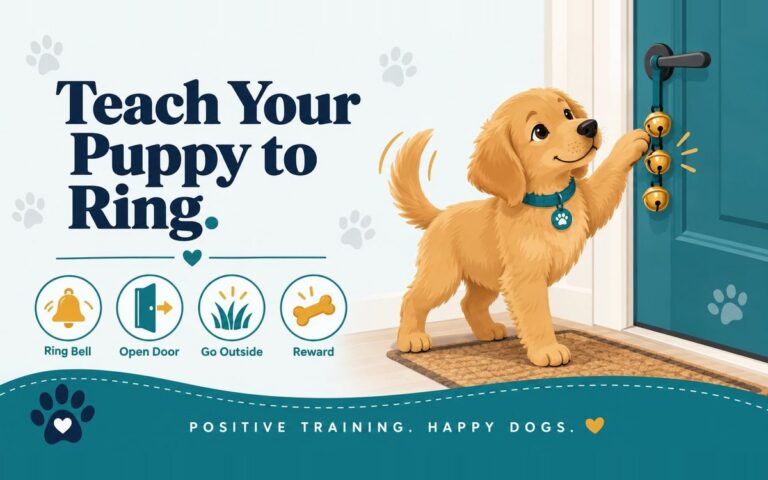
Hanging a bell by the door gives your puppy a clear way to tell you they need to go out. Many puppies pick it up within a couple of weeks. Here is how to do bell training step by step.
Biting, Chewing, and Manners
15. Redirect Teeth Onto Toys
When your puppy mouths your hands, calmly offer a toy instead. If they keep going for skin, pause play for a few seconds. They will learn that gentle mouths keep the fun going. The full approach is in how to stop puppy biting.
16. Respect Nap Time
Overtired puppies bite more, listen less, and get the zoomies at the worst moments. Puppies need around eighteen hours of sleep a day. If your puppy is suddenly wild, a calm break in their crate or pen often solves it.
17. Puppy-Proof Before You Need To
Move shoes, cables, and children’s toys out of reach before your puppy finds them. Every successful chew of something forbidden is practice of a habit you do not want. My guide to stopping a teething puppy from chewing everything has a full checklist.
18. Ignore Jumping, Reward Four Paws on the Floor
Turn away when your puppy jumps up, then reward them the moment all four paws are on the ground. Ask visitors to do the same. Consistency here prevents a big adult dog who launches at guests. The stop jumping guide covers it in depth.
Socialization and Confidence
19. Prioritize the Socialization Window
Between roughly three and sixteen weeks, puppies are especially open to new experiences. Calm, positive exposure to people, sounds, surfaces, and gentle dogs during this window shapes a confident adult. Use the socialization checklist to track it.
20. Let Your Puppy Watch From a Distance
Socialization does not mean forcing interactions. Sitting on a bench while your puppy watches the world go by, with treats for staying relaxed, is often more valuable than letting strangers handle them.
21. Practice Being Alone
Even if you work from home, teach your puppy to spend short periods alone from the start. A few minutes behind a baby gate with a chew, gradually increasing, helps prevent problems later. See puppy separation anxiety for the full plan.
22. Handle Paws, Ears, and Mouth Gently
Touch your puppy’s paws, ears, and mouth briefly each day, followed by a treat. It makes nail trims, grooming, and vet visits far less stressful for both of you.
Long-Term Success
23. Teach a Rock-Solid Recall Early
Coming when called can keep your dog safe, so start practicing it in the house from day one. Make coming to you the best thing that happens all day. The recall training guide has exercises for every stage.
24. Follow a Written Plan
It is easy to forget what you meant to work on this week. A simple written plan keeps you consistent and lets you see progress. My puppy training schedule by age gives you a ready-made outline, and a printable checklist makes it even easier to tick things off.
25. Be Patient With Your Puppy and Yourself
There will be days when it feels like nothing is sticking. That is normal. Puppies go through phases, including a cheeky adolescent stage around six to eighteen months when they seem to forget everything. Keep going, keep it kind, and trust the process. The work you put in now pays off for the next decade or more.
Putting the Tips Together: A Sample Day
Tips are easier to follow when you can see how they fit into an ordinary day. Here is roughly what a weekday looked like for me when Poki was around ten weeks old. Your timings will differ, but the rhythm is what matters.
- Early morning: straight outside before coffee, a reward for toileting, then breakfast. I used a handful of his kibble for a two-minute session on his name and sit.
- Mid-morning: a short play session, another toilet trip, then a nap in his crate with a chew. This was when I got my own work done.
- Lunchtime: toilet break, a few minutes of handling practice with his paws and ears, and some quiet time watching the street from the front step.
- Afternoon: another nap, a short enrichment activity like a snuffle mat, and a little leash practice in the hallway.
- Evening: dinner, a calm family session where everyone practiced the same cues with the same words, then settling on his bed with a chew while we watched TV.
- Last thing at night: one final, boring toilet trip with no play, then bed.
Looking at it written down, it was never more than about twenty minutes of actual training in a whole day. The rest was routine, management, and rest, which is exactly how it should be.
Popular Tips That Can Backfire
Some advice gets passed around so often that it sounds like common sense. A few of these well-meaning tips can slow your puppy down, so here is what to watch for.
“Tire Them Out With Long Walks”
A tired puppy is a good puppy, up to a point. Long forced walks are hard on growing joints, and an over-exercised puppy often becomes more wired, not less. Short outings, sniffing time, and brain games tire them out far more safely.
“Let Them Cry It Out”
Leaving a frightened young puppy to scream in a crate can make them fear the crate. It works much better to build crate time gradually and keep the crate close to you at night in the early weeks.
“Show Them Who Is Boss”
Ideas about dominance and being the pack leader have been widely questioned by modern behavior science. Puppies are not trying to take over your household. They are babies learning what works. Rewarding good choices builds a much better relationship than trying to win a power struggle.
“Rub Their Nose in Accidents”
This old advice teaches your puppy only one thing: that toileting in front of you is dangerous. It leads to puppies hiding behind the sofa to go. Calm cleaning and better supervision fix accidents far faster.
If you want ideas for keeping your puppy busy in a healthy way, my list of dog training games is a great place to start.
Want a Step-by-Step Program?
If you would like a structured program to follow alongside these tips, I recommend Brain Training for Dogs by Adrienne Farricelli, a certified professional dog trainer (CPDT-KA). It is built entirely on positive, reward-based methods and uses a series of brain games that grow harder as your puppy improves. Each exercise has a video demonstration, which takes the guesswork out of every step.
The Bottom Line
Great puppy training comes down to small habits done consistently: short sessions, tiny rewards, a predictable toilet routine, plenty of sleep, gentle socialization, and a family that agrees on the rules. Pick two or three tips from this list that address your biggest challenge right now and focus on those this week. Once they are working, add a few more. Step by step, your puppy will grow into a dog you are proud of.
Dog lover and devoted owner of a Golden Retriever named Poki, sharing what she has learned raising him with kind, positive methods. Learn more about Milica.