We work hard to keep our dogs safe, but some of the most common dangers are hiding in plain sight, in our gardens, on our windowsills, and under our kitchen sinks. Many everyday plants and household products that are completely harmless to us can make a dog seriously ill. The reassuring news is that once you know what to watch for, protecting your dog is straightforward.
This guide covers the plants and household items most likely to poison a dog, both indoors and out, along with the signs of trouble and simple steps to keep your home safe. It pairs naturally with knowing which foods are dangerous, and together they give you a full picture of the hazards to guard against. Let us walk through your home and garden and spot the risks.
In an emergency: If your dog eats a toxic plant or household product, call your vet or a pet poison helpline immediately. In the US, the ASPCA Animal Poison Control Center is (888) 426-4435. In the UK, the Animal PoisonLine is 01202 509000. Take a photo or sample of the plant or the product packaging to help them advise you.
Poisonous Plants Indoors
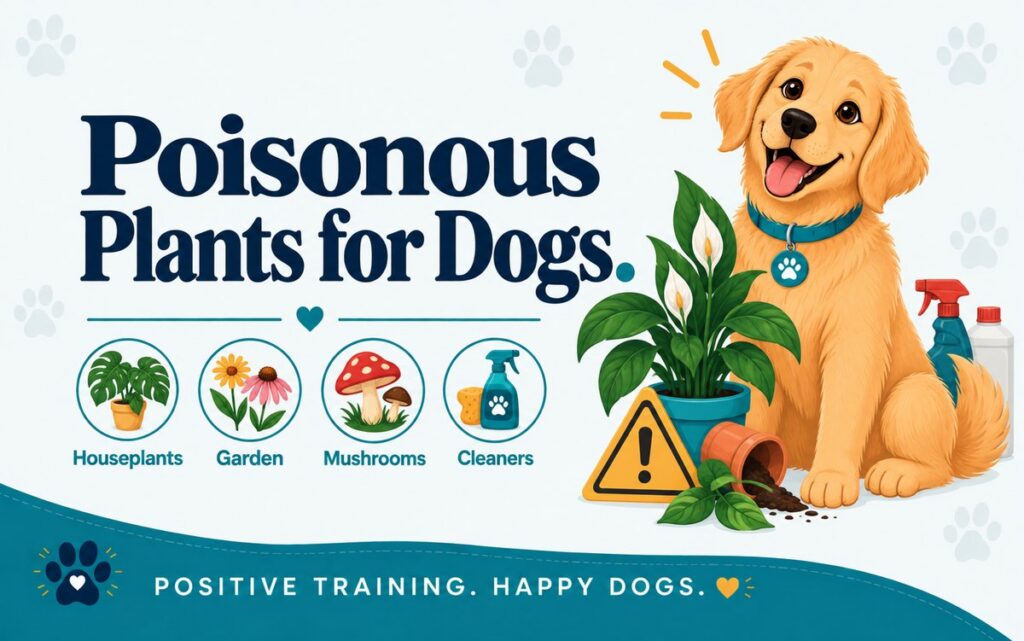
Houseplants brighten our homes, but several popular ones are toxic to dogs if chewed or eaten. If your dog likes to nibble greenery, it is worth checking what is within reach.
Some of the most common toxic houseplants include the sago palm, which is extremely dangerous and can cause liver failure even in small amounts. Dieffenbachia, also called dumb cane, and philodendron both contain crystals that cause intense mouth irritation, drooling, and swelling. Peace lilies and pothos cause similar irritation. Aloe vera, despite its benefits for us, can upset a dog’s stomach. Snake plant and ZZ plant are also mildly toxic if eaten.
A particularly important note for households with cats and dogs: true lilies are deadly to cats, and while less catastrophic for dogs, they can still cause stomach upset, so they are best avoided in a pet home entirely. If you love houseplants, the good news is there are many dog-safe options, including spider plants, Boston ferns, calathea, and areca palms.
Poisonous Plants in the Garden
The garden holds its own hazards, and dogs who like to dig or graze are most at risk. Several common garden and wild plants are toxic to dogs.
Among the most dangerous are foxglove, which affects the heart, and lily of the valley, which is similarly cardiotoxic. Azaleas and rhododendrons are highly toxic and cause vomiting, weakness, and heart problems. Daffodil bulbs are poisonous, as are tulip and hyacinth bulbs, which dogs sometimes dig up. Oleander is extremely toxic. Yew is dangerous in all its parts. Autumn crocus, wisteria, and castor bean plants are also on the list.
Perhaps the most important seasonal hazard is a fungal one rather than a plant. Certain wild mushrooms are deadly to dogs, and because it is so hard to tell toxic ones from harmless ones, the safest rule is to prevent your dog from eating any wild mushroom and to remove any that appear in your garden. If your dog eats a mushroom you cannot positively identify as safe, treat it as an emergency.
Dangerous Household Products
Beyond plants, the average home contains a number of products that are toxic to dogs. Most poisonings of this kind are accidental, so safe storage is the key.
Cleaning Products
Bleach, detergents, disinfectants, and many surface cleaners are toxic if licked or swallowed, and some can burn the mouth and throat. Be careful with freshly cleaned floors and surfaces, since dogs can lick residues from their paws. Store all cleaning products in closed cupboards well out of reach.
Medications
Human medicines are a leading cause of pet poisoning. Common painkillers like ibuprofen and paracetamol (acetaminophen) are highly toxic to dogs, as are many prescription drugs, antidepressants, and supplements. Never give your dog any human medication unless your vet directs it, and keep all pills, including vitamins, safely stored. Dogs have been known to chew through pill bottles and even foil blister packs.
Antifreeze
This deserves special mention because it is both extremely toxic and, tragically, appealing to dogs due to its sweet taste. Even a very small amount of antifreeze (ethylene glycol) can cause fatal kidney failure. Clean up any spills immediately, store it securely, and consider pet-safer propylene glycol alternatives. If you suspect your dog has had any antifreeze, it is a dire emergency, seek help instantly.
Other Common Hazards
Rodent poisons and slug pellets are designed to be eaten and are lethal to dogs, so use them with extreme caution or avoid them in a dog home. Insecticides and some lawn and garden chemicals can be toxic, so follow label directions and keep dogs off treated areas as instructed. Batteries are dangerous if chewed. And certain essential oils, including tea tree, eucalyptus, cinnamon, citrus, peppermint, and pennyroyal, can be toxic to dogs, whether licked up or, in some cases, diffused heavily in a small space, so use them cautiously around pets.
Signs Your Dog May Be Poisoned
Whatever the source, the signs of poisoning can vary, but there are common ones to watch for. These include vomiting and diarrhea, drooling, lethargy or weakness, tremors or seizures, difficulty breathing, pale or unusually colored gums, loss of coordination, and excessive drinking or urination. Some signs appear quickly, others take hours or days. If you ever see these signs and suspect a poison, do not wait to be certain, call for advice straight away.
How to Make Your Home and Garden Safe
A little prevention goes a long way. Walk through your home and remove or relocate toxic houseplants, putting any you keep well out of your dog’s reach. Do the same audit of your garden, removing the most dangerous plants and fencing off or supervising areas where risky ones grow. Store all cleaning products, medications, antifreeze, and garden chemicals in secure, closed places a dog cannot access.
Keep a close eye on dogs who like to chew plants or dig, and redirect that urge with safe chew toys and enrichment. Clear away fallen bulbs, wild mushrooms, and garden debris promptly. And as with food dangers, make sure everyone in the household knows the risks and keeps hazards stored safely. A dog-proofed home is a safe home.
What to Do If Your Dog Is Poisoned
If you suspect your dog has eaten a toxic plant or household product, act immediately. Call your vet or a pet poison line without delay, and be ready to tell them what your dog got into, how much, and when. A photo or sample of the plant, or the product’s packaging, is a huge help in guiding treatment. Do not try to make your dog vomit unless a professional instructs you to. Fast, expert-guided action is what gives your dog the best possible outcome.
The Bottom Line
Some of the most common dangers to dogs are the plants on our windowsills, the flowers in our gardens, and the products under our sinks. The most serious plant hazards include sago palm, foxglove, lilies, azaleas, and daffodil bulbs, while wild mushrooms are a deadly seasonal risk. Among household products, medications, antifreeze, cleaning supplies, and rodent poisons top the list. Audit your home and garden, store hazards securely, supervise chewers and diggers, and keep an emergency number handy. With those simple precautions, you can turn your home into the safe haven your dog deserves.

Dog lover and devoted owner of a Golden Retriever named Poki, sharing what she has learned raising him with kind, positive methods. Learn more about Milica.