Those big, hopeful eyes staring up at you while you eat are almost impossible to resist. Most of us love sharing a little something with our dogs, and the good news is that plenty of everyday foods are perfectly safe and even healthy for them. The tricky part is that some common foods are genuinely dangerous, and the line between the two is not always obvious.
This guide clears up the confusion. I will walk you through the foods that are safe to share, the ones you should absolutely never give, and the simple rules that keep treat time happy and healthy. Keep this page handy, because it is exactly the kind of thing you want to check before slipping your pup a bite of whatever you are having.
Important: If your dog eats something toxic, do not wait to see what happens. Call your veterinarian or a pet poison helpline right away. In the United States you can reach the ASPCA Animal Poison Control Center at (888) 426-4435, and in the UK the Animal PoisonLine at 01202 509000. Acting fast can save your dog’s life.
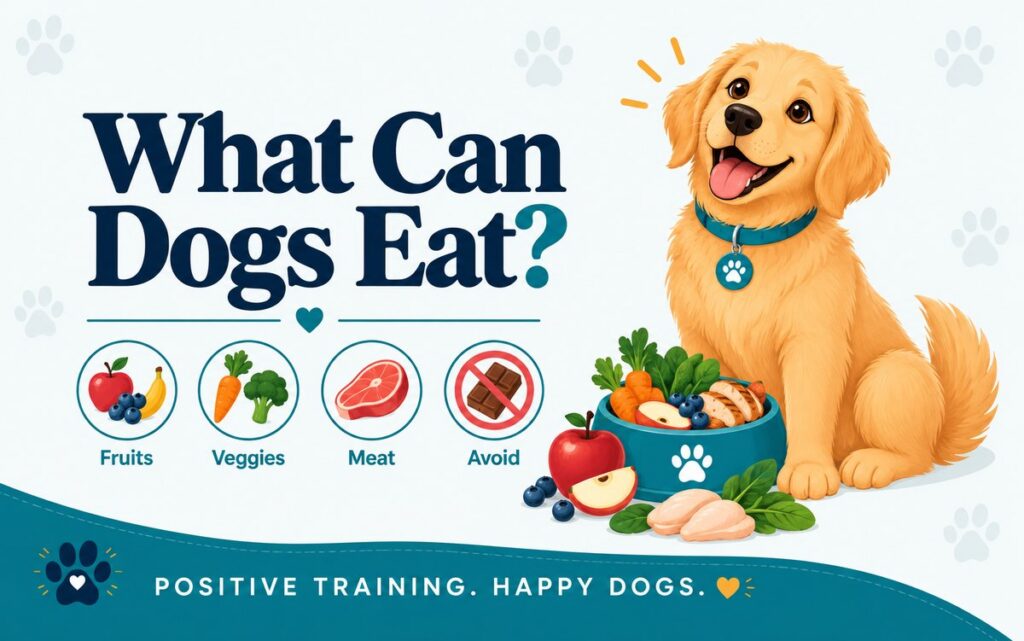
The Quick Safe and Toxic Food Chart
Here is an at-a-glance reference. Read on below for the details on why each food falls where it does, and how to serve the safe ones properly.
| Safe in moderation | Never give |
|---|---|
| Carrots | Chocolate |
| Plain cooked chicken | Grapes and raisins |
| Blueberries | Onions and garlic |
| Apple slices (no seeds) | Xylitol (sweetener) |
| Plain pumpkin | Macadamia nuts |
| Green beans | Alcohol |
| Plain cooked salmon | Cooked bones |
| Watermelon (no seeds) | Caffeine |
| Plain rice | Avocado |
| Bananas | Raw bread dough |
Foods That Are Safe to Share
Let us start with the happy news, because there is a lovely range of foods your dog can enjoy. A good rule to remember for all of them is that treats and human-food extras should make up no more than about ten percent of your dog’s daily calories. The rest should come from a balanced dog food. With that in mind, here are some great options.
Fruits and Vegetables
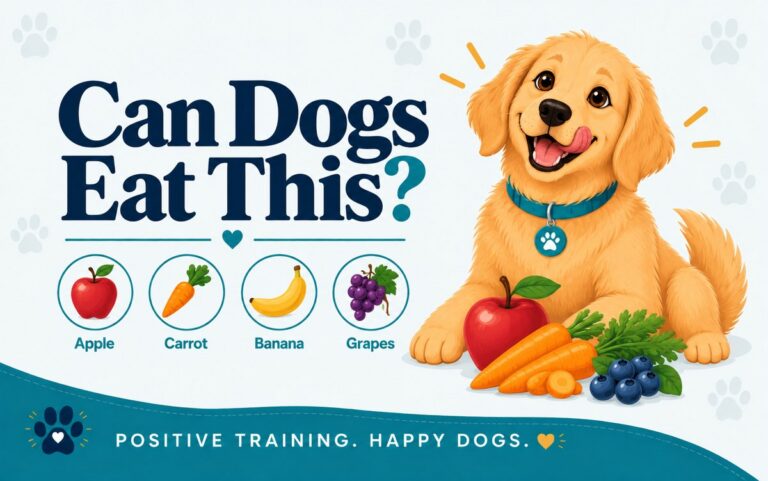
Many fruits and vegetables make wonderful, low-calorie treats. Carrots are a favorite, crunchy and satisfying, and great for a teething puppy or a dog watching their weight. Green beans, plain and cooked or raw, are filling and healthy. Blueberries are little antioxidant-packed treats most dogs adore. Apple slices are fine as long as you remove the core and seeds, since apple seeds contain a compound that is harmful in quantity. Watermelon is refreshing on a hot day once you take out the seeds and rind. Bananas are sweet and rich in potassium, though a little goes a long way because of the sugar.
Plain pumpkin, the pure kind and not the spiced pie filling, is gentle on the stomach and often recommended for digestive upsets. A little cooked sweet potato is another safe, wholesome option. As a general habit, introduce any new food in a small amount and watch how your dog reacts before offering more.
Proteins
Plain, cooked, unseasoned meat is one of the best high-value treats for training. Cooked chicken, turkey, and lean beef are all excellent, as long as they are boneless and free of salt, butter, onion, garlic, and other seasonings. Plain cooked salmon and other cooked fish are safe too, and the omega-3 fats are good for the skin and coat, just make sure every bone is removed. Eggs, cooked plainly, are a nutritious occasional treat.
The key word throughout is plain. The meat itself is rarely the problem. It is the oil, salt, garlic, and other flavorings we cook it with that cause trouble, so set your dog’s portion aside before you season yours.
Other Safe Snacks
Plain cooked rice and plain pasta are gentle, bland options often used to settle an upset stomach. Plain, unsalted, unbuttered popcorn is a fun, light treat. A small amount of plain, xylitol-free peanut butter is a classic favorite and perfect for stuffing into a chew toy. Plain yogurt in small amounts suits many dogs, though some are sensitive to dairy, so start tiny.
Foods You Should Never Give Your Dog
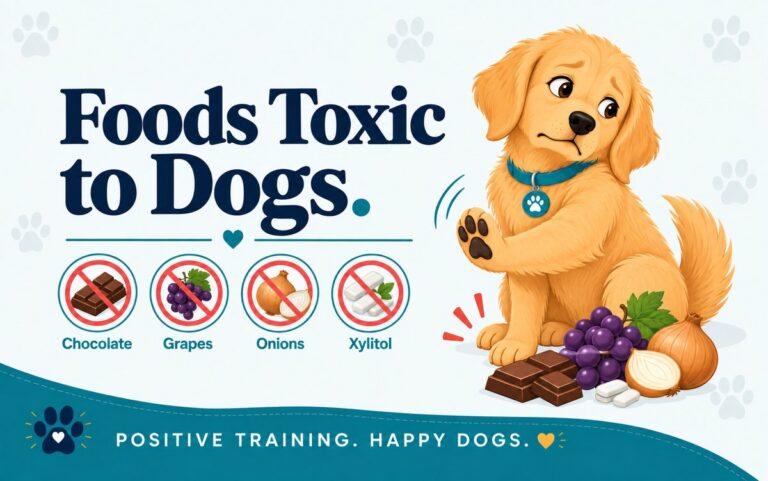
Now for the foods that belong firmly off-limits. Some of these are so toxic that even a small amount can cause serious harm, so it is worth knowing them by heart.
Chocolate
Probably the most famous danger, and for good reason. Chocolate contains theobromine, which dogs cannot process the way we can. Darker chocolate is more dangerous than milk chocolate, and baking chocolate is the worst of all. Even a modest amount can cause vomiting, a racing heart, tremors, and in serious cases seizures. Keep all chocolate well out of reach, especially around holidays when it tends to be lying around.
Grapes and Raisins
These are deceptively dangerous. Grapes and raisins can cause sudden kidney failure in dogs, and the alarming part is that the toxic dose is unpredictable. Some dogs react badly to just a few. Because there is no safe amount, treat any grape or raisin ingestion as an emergency and call your vet immediately.
Onions, Garlic, and Chives
All members of the onion family, including garlic, leeks, and chives, damage a dog’s red blood cells and can lead to anemia. This is true whether they are raw, cooked, or powdered, which is why so many seasoned human foods are off-limits. The effects can be delayed by a few days, so a dog may seem fine at first and become unwell later.
Xylitol
This sugar substitute, found in many sugar-free gums, sweets, some peanut butters, and baked goods, is extremely toxic to dogs. It causes a rapid, dangerous drop in blood sugar and can lead to liver failure. Always check the label of any peanut butter before sharing it, and keep sugar-free products well away from your dog.
Other Serious Dangers
Macadamia nuts can cause weakness, tremors, and overheating. Alcohol, even in small amounts, is far more potent in dogs than in people and can be life-threatening. Caffeine, in coffee, tea, and energy drinks, is dangerous for the same reasons as chocolate. Avocado contains a substance called persin that can upset a dog’s stomach, and the large pit is a choking and blockage hazard. Raw bread dough is genuinely dangerous, because it expands in the warm stomach and the fermenting yeast produces alcohol. And cooked bones, unlike raw ones, splinter easily and can cause choking or serious internal injury.
A Few Golden Rules for Sharing Food
Beyond the specific lists, a handful of simple habits keep things safe. Always serve human food plain, with no salt, butter, oil, or seasoning. Introduce anything new in a small amount and watch for any reaction over the next day or so. Remove all seeds, pits, cores, and bones. Keep treats to that ten percent of daily calories so your dog stays trim. And when in doubt about any food, leave it out and check first, because it is never worth the risk.
It is also worth remembering that even safe foods can cause a stomach upset if your dog eats too much of something new. Moderation really is the whole game. A few blueberries or a slice of carrot is a treat. A whole bowl of anything is asking for trouble.
What to Do If Your Dog Eats Something Toxic
If you suspect your dog has eaten something dangerous, stay calm and act quickly. Do not wait for symptoms to appear, because with some toxins the damage is well underway before a dog looks unwell. Call your veterinarian or a pet poison control line straight away, and if you can, tell them what your dog ate, roughly how much, and when. If there is packaging, keep it to hand so you can read out the ingredients.
Do not try to make your dog vomit unless a professional specifically tells you to, since with some substances that does more harm than good. The safest, fastest thing you can do is get expert advice on the phone immediately and follow it.
The Bottom Line
Sharing food with your dog can be a lovely part of life together, and plenty of everyday foods are safe when served plainly and in moderation. Carrots, blueberries, plain cooked chicken, and a little peanut butter are all wonderful treats. The foods to remember as absolute no-goes are chocolate, grapes and raisins, onions and garlic, xylitol, and alcohol, among the others listed above. When you are unsure, always check before you share, and keep an emergency vet or poison line number somewhere easy to find. A little caution keeps treat time exactly what it should be, a happy moment between you and your dog.
Dog lover and devoted owner of a Golden Retriever named Poki, sharing what she has learned raising him with kind, positive methods. Learn more about Milica.