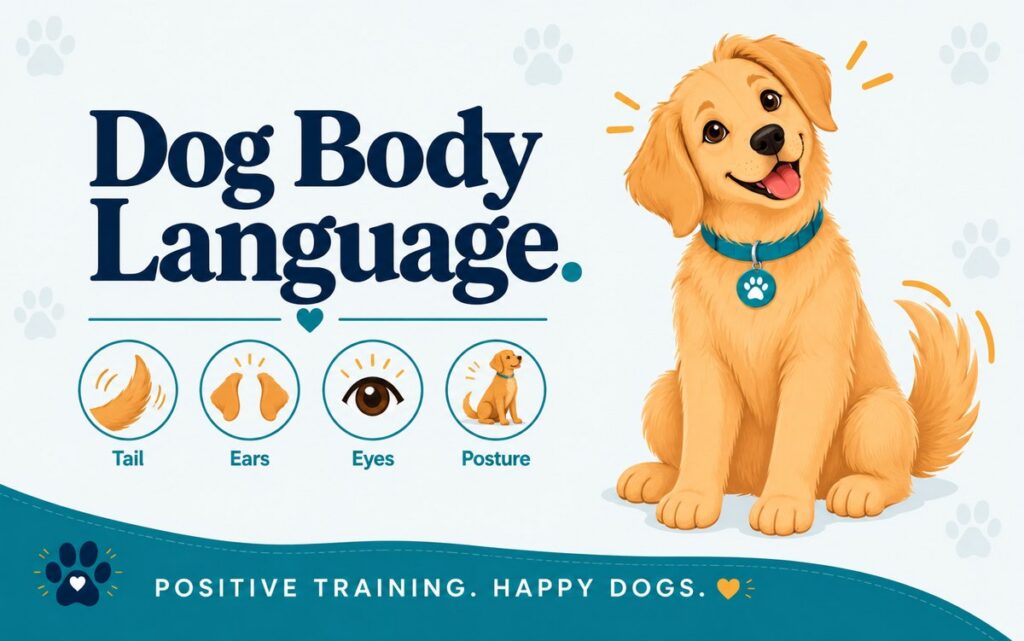
Your dog is talking to you all the time. Not with words, of course, but with their ears, their tail, their eyes, and the way they hold their whole body. Learning to read that silent language is one of the most rewarding things you can do as an owner. It deepens your bond, makes training easier, and, most importantly, keeps everyone safe by helping you spot when a dog is uncomfortable long before things escalate.
The catch is that dog body language is often misread. That wagging tail does not always mean a happy dog. Those “guilty” eyes are not actually guilt. This guide will teach you what your dog is really saying, signal by signal, so you can understand them the way they understand you. Keep it handy, because reading dogs well is a skill that pays off every single day.
Why Reading Body Language Matters So Much
Dogs communicate their feelings constantly, and they usually give plenty of warning before they react to something. A dog who bites “out of nowhere” almost never does. Nearly always, they were signaling discomfort for a while first, and those signals were simply missed. Learning to read them means you can step in early, remove your dog from a stressful situation, and prevent a bad outcome.
Beyond safety, understanding body language makes you a better, kinder owner. You will know when your dog is happy and relaxed, when they need space, when they are unsure, and when they are genuinely enjoying themselves. That understanding is the foundation of trust, and it makes everything from training to vet visits go more smoothly.
Quick Dog Body Language Chart
Here is an at-a-glance summary. Remember as you read it that no single signal tells the whole story, so always look at the entire dog, which we will come back to.
| What you see | What it often means |
|---|---|
| Loose, wiggly body, soft eyes | Relaxed and happy |
| Play bow (front down, back up) | Let’s play! |
| Tail tucked, body lowered | Fearful or anxious |
| Stiff body, hard stare | Tense, warning to back off |
| Lip licking, yawning (when not tired) | Stressed or uneasy |
| “Whale eye” (whites showing) | Uncomfortable, feeling trapped |
| Ears back and flat | Nervous or appeasing |
| Raised hackles (fur along back) | Aroused (fear or excitement) |
| Rolling over, belly up | Trust, or appeasement |
Reading the Tail
The tail is where most people go wrong. We are taught that a wagging tail means a happy dog, but that is only half true. A wag simply means arousal, which can be positive or negative. What matters is how the tail is wagging and where it is held.
A broad, loose, sweeping wag, often with the whole back end wiggling, is your genuinely happy dog. A tail held high and stiff, wagging in quick, tight movements, can signal tension or a dog who is on alert. A tail tucked low between the legs shows fear or anxiety. And a tail held in a neutral, natural position usually means a calm, comfortable dog. Interestingly, research suggests dogs wag slightly more to the right when they feel positive and to the left when they feel negative, though that is subtle. The takeaway is simple: look at the tail’s height and stiffness, not just the fact that it is moving.
Reading the Ears
Ears are wonderfully expressive, though their exact look varies a lot by breed. The principle holds across all of them. Ears in a natural, relaxed position suggest a calm, content dog. Ears pricked forward show alertness and interest, your dog has noticed something and is focused on it. Ears pinned back flat against the head signal fear, anxiety, or a dog trying to appease. With floppy-eared breeds, watch the base of the ear and the muscles around it, since the message is the same even when the ear itself hangs down.
Reading the Eyes and Face
A dog’s eyes and mouth reveal a great deal once you know what to look for.
Soft, relaxed eyes with a slightly open, loose mouth are the picture of a comfortable dog. A hard, fixed stare with tension around the eyes is the opposite, a dog who is uneasy and possibly issuing a warning. One especially important signal is “whale eye,” where the dog turns their head away but keeps looking at something, showing the whites of their eyes in a half-moon. This means the dog feels trapped or very uncomfortable, and it is a clear request for space.
The mouth matters too. A relaxed, slightly open mouth, sometimes called a doggy smile, is a happy sign. A tightly closed mouth with tension can mean stress or focus. Lip licking when there is no food around, and yawning when the dog is not tired, are both common stress signals, little ways a dog says “I am not comfortable right now.” Learning to spot these calming signals is genuinely powerful, because they appear early, well before any growl.
Reading the Whole Body
Zoom out from the individual parts and look at the dog’s overall posture and weight.
A loose, wiggly, relaxed body is a happy dog. A dog who makes themselves small, crouching low, leaning back, or rolling belly-up, is showing fear or appeasement, trying to signal they are no threat. A dog who stands tall and stiff, leaning forward, weight over their front legs, is tense and possibly ready to react. Raised hackles, the fur standing up along the back, mean the dog is highly aroused, though this can come from fear or excitement rather than aggression, so read it alongside everything else.
The famous play bow, where the dog drops their front end down and keeps their back end up, tail wagging, is a clear and delightful invitation to play. It is one of the easiest signals to recognize and always a joy to see.
The Golden Rule: Look at the Whole Dog
Here is the single most important thing to understand about body language. No signal means anything on its own. A wagging tail on a stiff, staring dog with a closed mouth means something very different from a wagging tail on a loose, wiggly dog with soft eyes. You have to read the whole dog together, in context.
Think of it like reading a sentence rather than a single word. The tail, ears, eyes, mouth, and posture are all words, and only together do they tell you what your dog is actually feeling. When you practice looking at the complete picture, you will start to read your dog with surprising accuracy, and you will notice things you used to miss entirely.
Common Misreadings to Unlearn
A few myths trip owners up constantly, so they are worth naming. A wagging tail does not always mean friendly, as we have seen. The “guilty look” after a dog has done something wrong is not guilt at all, it is a fearful, appeasing response to your body language and tone, since dogs do not connect a scolding to something they did earlier. A dog rolling onto their back is not always asking for a belly rub, sometimes it is an anxious appeasement gesture, so check the rest of the body. And a yawn is not always tiredness. Unlearning these myths makes you dramatically better at understanding what your dog truly needs.
Why This Keeps Everyone Safe
Reading body language is not just about connection, it is about prevention. Most dog bites happen because warning signals were missed, especially with children who naturally want to hug and get close to dogs. When you can spot the early signs of discomfort, the lip licks, the whale eye, the stiffening, the tucked tail, you can calmly give your dog space or end the interaction before anyone gets hurt. Teaching children to recognize a few of these signs, and to always give a dog room, is one of the most valuable safety lessons a family can learn.
The Bottom Line
Your dog is communicating with you every moment, and learning their language is one of the greatest gifts you can give the relationship. Watch the tail’s height and stiffness, not just its motion. Notice the ears, the softness or tension in the eyes, the lip licks and yawns that signal stress. Above all, read the whole dog together rather than any single part. Do that, and you will understand your dog more deeply, train them more easily, and keep everyone around them safe. The more you watch, the more fluent you will become, and the closer you and your dog will grow.
Dog lover and devoted owner of a Golden Retriever named Poki, sharing what she has learned raising him with kind, positive methods. Learn more about Milica.