Affiliate Disclaimer: This post contains affiliate links. If you purchase through them, I may earn a small commission at no extra cost to you. I only recommend programs I genuinely believe can help you and your dog.
Puppies are social little creatures. Until they come home with you, they have probably never been truly alone, always surrounded by their mother, littermates, or people. So it is no surprise that many puppies cry, howl, or panic the first time a door closes between them and their new family.
Learning to be alone calmly is a skill, and like any skill, it has to be taught. The best time to teach it is right now, while your puppy is young and before worries can turn into habits. This guide explains what separation anxiety looks like, how to prevent it with a gradual plan, and when to get extra support.
Normal Puppy Protest or Separation Anxiety?
It helps to know the difference. Most young puppies protest a little when left: some whining or barking that stops within a few minutes as they settle. That is normal, and it usually fades with gentle practice.
True separation anxiety is a panic response. Signs can include:
- Constant howling, barking, or crying that does not settle
- Frantic scratching or chewing at doors, windows, or crate bars
- Toileting indoors only when alone, even in a house-trained puppy
- Drooling, panting, or pacing
- Refusing food or chews while you are gone
- Extreme excitement or distress as you prepare to leave
If you see these signs, it is worth speaking to your vet and a qualified positive-reinforcement trainer or behaviorist, because anxiety this intense rarely resolves on its own.
Why Prevention Matters
Puppies who learn early that being alone is safe and even pleasant are far less likely to develop separation problems as adults. Many cases of adult separation anxiety start with a puppy who was never left alone at all, often because their owner was home a lot, and then suddenly faced long absences. Building alone time into your routine from the first week protects your puppy from that shock.
The Gradual Alone-Time Plan
The secret is to start tiny and build slowly, always ending before your puppy gets upset. You are teaching them that you always come back and that nothing bad happens while you are gone.
Stage 1: Out of Reach, Still in Sight
Put your puppy in their pen or behind a baby gate with a tasty chew or a stuffed toy. Stay in the room, potter around, and ignore them calmly. Let them enjoy the chew for a few minutes, then let them out without fuss. Repeat several times a day.
Stage 2: Brief Absences
Once your puppy happily works on a chew while you move around, step out of the room for just a few seconds, then come back. Gradually increase to a minute, then two, then five. If your puppy starts crying, you went too far too fast. Next time, make the absence shorter.
Stage 3: Longer Absences in the House
Build up to ten, twenty, then thirty minutes while you are in another room or the garden. Vary the length so your puppy does not learn a pattern. Some short absences, some longer ones.
Stage 4: Leaving the House
Start with very short trips outside, such as taking the bins out or walking to the end of the road. Gradually build up. Most puppies can manage being alone for about an hour per month of age, but young puppies also need toilet breaks, so plan longer absences carefully and arrange a sitter or walker when needed.
Make Alone Time Enjoyable
The more your puppy looks forward to alone time, the easier it becomes.
- Save a special chew for when you leave. A frozen stuffed toy or long-lasting chew that only appears when you go out becomes something to look forward to.
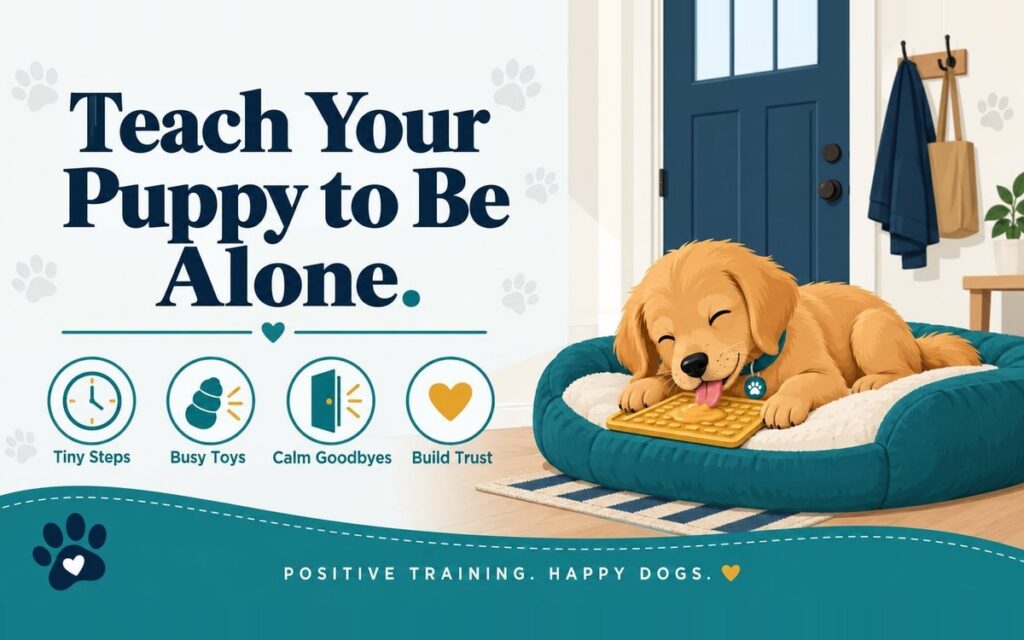
- Use food puzzles. Snuffle mats and treat-dispensing toys keep busy minds happy. My dog enrichment ideas list has plenty of options.
- Make the space cozy. A comfortable bed, a familiar blanket, and a quiet room help.
- Try calming background sound like soft music or a radio at low volume.
Calm Departures and Returns
Dramatic goodbyes and over-the-top hellos can make absences feel like a big deal. Keep both low-key.
- Give your puppy their special chew, then leave quietly without a long goodbye.
- When you come home, wait until your puppy is calm before greeting them warmly.
- Avoid scolding for anything that happened while you were out. Your puppy cannot connect it to the past.
Desensitize Departure Cues
Puppies quickly learn the signs that you are about to leave: picking up keys, putting on shoes, grabbing a coat. If these cues make your puppy anxious, practice them without leaving. Pick up your keys and sit down to watch TV. Put on your shoes and make a cup of tea. Over time, the cues lose their power to worry your puppy.
Exercise and Mental Stimulation First
A puppy who has had a good sniff, a short training session, and some play is far more likely to rest while you are out. Schedule a calm activity before longer absences. Short training games and enrichment are ideal because they tire the brain without overexciting your puppy.
The Role of the Crate
For many puppies, a crate they love becomes a safe den that helps them relax when alone. The key word is love. A crate should never be used as punishment, and a puppy who panics in the crate should not be shut in it while you are out. Build positive crate associations first using my crate training schedule. Some puppies do better in a puppy-proofed pen or a small room instead, and that is fine.
Common Mistakes
- Never leaving your puppy alone. It feels kind but sets up problems later.
- Going too far too fast. Jumping from five minutes to four hours can undo your progress.
- Returning when your puppy cries. If possible, come back during a quiet moment, even a brief one. Then make the next absence shorter.
- Punishing distress. Anxiety cannot be scolded away. It needs patient support.
When to Get Help
Talk to your vet if your puppy shows signs of real panic, injures themselves trying to escape, or does not improve with a gradual plan. Your vet can rule out medical issues, and a qualified positive-reinforcement behaviorist can create a tailored plan. Learning to read your puppy’s body language will help you spot stress early, before it builds.
Fitting Alone Time Into Your Routine
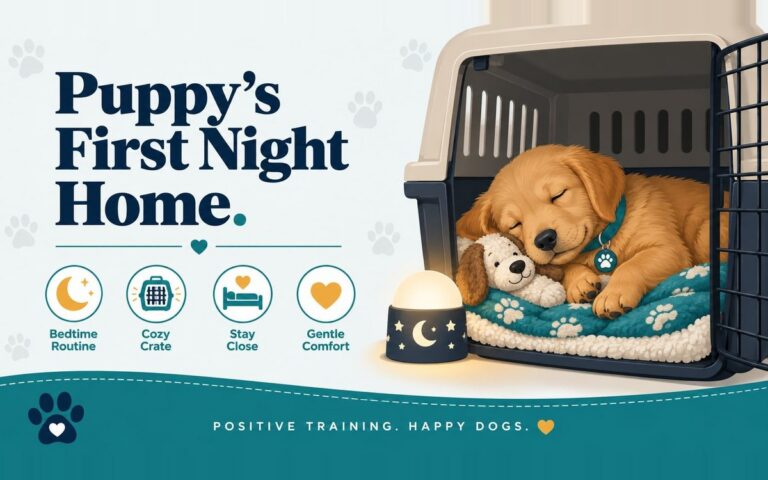
Alone-time practice fits naturally alongside house training, crate training, and socialization in the first months. My puppy training schedule by age shows when to start each stage, and the guide to your puppy’s first night home covers settling at night. For a printable plan that keeps everything on track, grab the checklist below.
Film Your Puppy While You Are Out
The single most useful tool for alone-time training is a cheap camera or an old phone propped on a shelf. Without one, you are guessing. With one, you can see exactly how your puppy behaves after the door closes, and you can set the length of each absence based on facts rather than hope.
Watch for the moment your puppy settles. Many puppies sniff around, whine briefly, then lie down with their chew within a minute or two. That is a puppy who is coping well. If instead you see pacing, scratching at the door, or crying that builds rather than fades, note how many minutes in it started. Your next absences should be shorter than that point, so your puppy keeps having successful experiences.
When I was teaching Poki to stay home alone, the video surprised me. I had assumed he cried the whole time, because I could hear him as I walked down the stairs. In fact he whined for about forty seconds, then flopped down with his chew and slept. Knowing that changed how relaxed I felt about leaving, and dogs pick up on our mood more than we think.
A Sample First Week of Alone-Time Practice
Every puppy moves at their own pace, but this rough outline shows how gentle the early days should be.
- Days 1 and 2: Your puppy rests in their pen with a chew while you sit nearby. Several short sessions a day. Lots of naps.
- Days 3 and 4: Step out of sight for a few seconds, then for a minute or two, while your puppy works on a chew. Come back calmly.
- Days 5 and 6: Build to five or ten minutes in another room. Mix in some very short absences so it never feels predictable.
- Day 7: Try a quick trip outside the front door, such as checking the post. Return before your puppy has time to worry.
If your puppy struggles at any stage, go back to the last step that felt easy and stay there a little longer. Slow progress that sticks is far better than fast progress that falls apart.
How Long Can a Puppy Be Left Alone?
This depends on age, bladder control, and how much practice your puppy has had. As a rough guide:
| Age | Comfortable alone time (once trained) |
|---|---|
| 8 to 10 weeks | Up to about 1 hour |
| 10 to 12 weeks | Up to about 2 hours |
| 3 to 6 months | Roughly 1 hour per month of age |
| 6 months and older | Up to about 4 hours, building gradually |
These are upper limits for puppies who are already comfortable alone, not starting points. Even adult dogs should not routinely be left for a full working day without a break. If you work long hours, a dog walker, a trusted neighbour, or doggy daycare can fill the gap. For toilet timing, my potty training schedule helps you plan breaks around your puppy’s age.
Troubleshooting Common Problems
My puppy ignores the chew until I come back
This is a classic sign that your puppy is too worried to eat. Go back to an earlier stage where you are still in sight, and let them enjoy the chew in your presence first. Food that is refused when alone is useful information, not a failure.
My puppy is fine during the day but cries at night
Night-time is different because your puppy is tired and the house is dark and quiet. Many people find that having the crate in the bedroom for the first few weeks solves it, then moving it gradually later. My guide to the first night home covers this in detail.
My puppy follows me everywhere
Velcro puppies are common, and gentle independence training helps. Use baby gates so your puppy can see you without always being at your feet, reward calm settling on a bed, and practice the stay cue while you move further away in tiny steps.
We were doing well, then it got worse
Setbacks often follow a change in routine: a holiday, a house move, a new baby, or simply a fear period in adolescence. Drop back a stage or two for a week and rebuild. Your puppy has not forgotten everything. They just need a confidence top-up.
Frequently Asked Questions
Should I get a second dog to keep my puppy company?
Not as a fix for separation problems. Many anxious dogs are attached to a specific person, and another dog does not help them. A second dog is a big decision that should be made for its own sake.
Is it cruel to leave a puppy alone at all?
No. Short, well-planned absences are kind because they prepare your puppy for real life. Never leaving them alone is what tends to cause problems later.
Do calming sprays or plug-ins work?
Some owners find pheromone products helpful as an extra, but they are not a substitute for gradual training. Ask your vet before relying on any calming product.
How long does it take to fix separation anxiety?
Prevention in a young puppy can take a few weeks of daily practice. True separation anxiety in an older puppy or adult dog can take months and usually benefits from professional support.
Want a Step-by-Step Program?
Mental stimulation is one of the best tools for a calm puppy. Brain Training for Dogs by Adrienne Farricelli, a certified professional dog trainer (CPDT-KA), uses positive, reward-based brain games that build confidence and focus, with a video demonstration for every exercise. It is a useful companion to the alone-time plan above.
The Bottom Line
Being alone is a skill your puppy needs to learn, and early practice is the best way to prevent separation anxiety. Start with tiny absences while your puppy enjoys a special chew, build up slowly, keep departures and returns calm, and make sure your puppy is tired and content before you go. Never punish distress, and get professional help if you see signs of real panic. With patience, your puppy will learn that you always come back, and that the time in between is perfectly safe.
Dog lover and devoted owner of a Golden Retriever named Poki, sharing what she has learned raising him with kind, positive methods. Learn more about Milica.