Affiliate Disclaimer: This post contains affiliate links. If you purchase through them, I may earn a small commission at no extra cost to you. I only recommend programs I genuinely believe can help you and your dog.
Nobody warns you how sharp puppy teeth are. Those tiny white needles can leave your hands scratched, your sleeves full of holes, and your patience worn thin by the end of the first week. If your sweet new puppy has turned into a little land shark, take a breath. Puppy biting is completely normal, it is temporary, and with the right approach it fades faster than you might expect.
This guide explains why puppies bite, when it usually stops, and a gentle, positive method for teaching your puppy to keep their teeth to themselves. No yelling, no holding mouths shut, no tapping noses. Those approaches tend to make biting worse, and they cost you your puppy’s trust.
Why Do Puppies Bite So Much?
Puppies use their mouths the way human babies use their hands. Biting is how they explore textures, play with their littermates, and figure out how the world works. A few specific reasons make it especially intense:
- Play. Puppies wrestle and mouth each other constantly. When they join your family, you become their new playmate.
- Teething. Between roughly three and six months, adult teeth push through, and chewing helps relieve the discomfort.
- Overtiredness. An overtired puppy bites harder and more often. Many “crazy” spells are simply a puppy who needs a nap.
- Overexcitement. Fast movements, flapping hands, and squeals all make biting more exciting.
- Attention. If biting reliably gets a reaction, a puppy will keep trying it.
When Does Puppy Biting Stop?
Most puppies bite far less by around six to seven months, once their adult teeth are in and they have learned what is acceptable. That timeline depends heavily on what they are taught in the meantime. Puppies who learn bite inhibition early often grow out of it sooner, while puppies who are accidentally rewarded for biting can keep it going much longer.
What Is Bite Inhibition?
Bite inhibition means your puppy learns to control the pressure of their mouth. It is arguably the most important thing a puppy can learn, because a dog with good bite inhibition is far less likely to cause injury if they ever feel frightened or hurt as an adult. Puppies start learning it from their littermates, who yelp and stop playing when a bite is too hard. Your job is to continue that lesson.
The Step-by-Step Method
Step 1: Always Have a Toy Ready
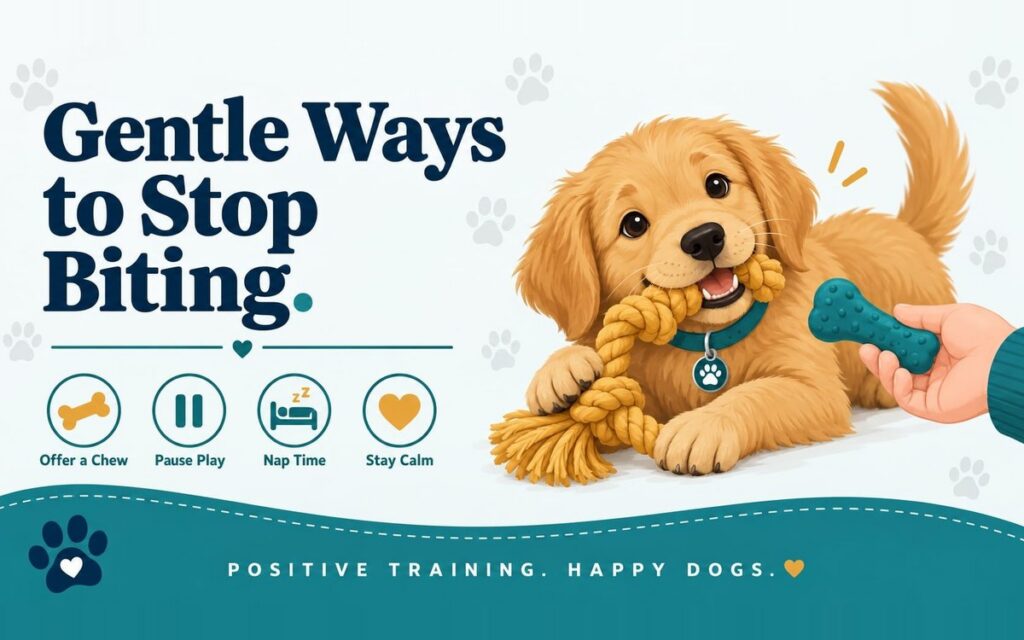
Keep soft tug toys, rope toys, and chews within reach in every room. The moment your puppy reaches for your hand, offer a toy instead. Make the toy more exciting by wiggling it along the floor. You are teaching your puppy what they can bite, which is just as important as teaching them what they cannot.
Step 2: Pause Play When Teeth Touch Skin
If your puppy bites your skin during play, calmly say “oops” in a neutral voice, then stop moving and withdraw your attention for a few seconds. Fold your arms, look away, or stand up. When they calm down, resume play with a toy. Puppies quickly learn that gentle play keeps the fun going and teeth on skin ends it.
Step 3: Use a Short Time-Out if Needed
If your puppy keeps biting after a pause, calmly step behind a baby gate or pop them in their pen with a chew for a minute or two. This is not punishment. It simply removes the fun and gives an overexcited puppy a moment to settle. Keep it brief and neutral.
Step 4: Reward Calm Mouths
When your puppy sniffs or licks your hand gently instead of biting, mark it with a quiet “yes” and give a treat. You can also practice deliberately: hold out a closed hand, and reward your puppy for touching it with their nose instead of their teeth. This grows into a lovely hand target trick.
Step 5: Teach “Leave It” and “Drop It”
These two cues help enormously when your puppy grabs sleeves, shoelaces, or anything else they should not. My guide to teaching leave it and drop it shows how to build both with treats and trades.
Taming the Evening Crazies
Many puppies have a wild spell in the evening, often called the witching hour, when they zoom around and bite everything in sight. It is usually a sign of overtiredness or built-up energy. A few things help:
- Get ahead of it. Schedule a calm activity like a stuffed chew toy or snuffle mat just before the usual crazy time.
- Enforce naps. Puppies need around eighteen hours of sleep a day. If your puppy is wild, a nap in their crate is often the fix.
- Offer something to chew. Chewing is naturally calming. A frozen carrot or a safe chew helps a teething puppy settle.
- Avoid rough games. Wrestling and hand-chasing games at this time of day add fuel to the fire.
My list of dog enrichment ideas has lots of calming activities that work well for this.
Teething and Biting
If biting seems to get worse at around four months, teething is a likely culprit. Sore gums make puppies want to chew everything. Offer chews of different textures, freeze a wet washcloth for them to gnaw, or try frozen chew toys. My full guide on helping a teething puppy who chews everything covers safe options and puppy-proofing.
What Not to Do
Do Not Hold the Mouth Shut or Tap the Nose
These old-fashioned methods can frighten your puppy and make them wary of hands near their face. Some puppies also see it as part of the game and bite harder.
Do Not Pull Your Hand Away Fast
Quickly yanking your hand away turns it into a moving target, which is exactly what makes biting fun. Keep your hands still and calm, and redirect to a toy.
Do Not Play Hand Games
Wiggling fingers at your puppy or wrestling with bare hands teaches them that hands are toys. Always put a toy between your hands and their teeth.
Do Not Yell or Squeal Loudly
A sharp yelp works for some puppies, but for many it simply adds excitement. A calm “oops” and a pause is more reliable.
Biting and Children
Puppies often target children because kids move quickly, squeal, and are at the perfect height. Always supervise puppies and young children together. Teach children to stand still like a tree and fold their arms if the puppy gets mouthy, then call an adult. Give children a toy to offer the puppy instead of their hands, and keep play sessions short and calm.
Real-Life Biting Situations and What to Do
The general method works for most biting, but certain moments come up again and again. Here is how I handle the trickiest ones.
Biting Ankles and Trouser Legs
Walking feet are irresistible to a puppy. When Poki was small, crossing the kitchen felt like wading through a very determined piranha. The fix is to stop walking the moment your puppy grabs, stand still so your feet become boring, then toss a toy away from you and reward them for chasing it. Better still, carry a treat pouch and reward your puppy for walking beside you before they ever latch on. For a few weeks, a long tug toy tucked in your back pocket and trailing behind you gives them something legal to chase.
Biting When You Pick Them Up
Some puppies wriggle and nip when lifted, often because they feel unsteady or do not like being restrained. Support the chest and back end fully, keep holds short, and pair lifting with a treat. Practice gently for a second or two at a time when your puppy is relaxed, rather than only picking them up when you need to do something they dislike.
Biting During Grooming or Toweling
Brushes and towels look like tug toys to a puppy. Smear a little dog-safe spread on a lick mat to keep their mouth busy while you groom, and keep sessions very short at first. Reward calm stillness generously. Over time, grooming becomes something your puppy tolerates happily rather than wrestles with.
Biting When You Stop Playing
If your puppy bites as soon as a game ends, they are protesting the loss of fun. Give a clear end cue like “all done,” then hand over a chew or scatter a few treats on the floor so the end of play leads to something good. Ending games before your puppy gets overexcited also helps a lot.
Biting Guests
Visitors often encourage biting without meaning to by waving hands and squealing. Before guests arrive, give your puppy a chance to burn some energy and toilet. Pop them on a lead or behind a gate when people first come in, and hand guests a toy to offer instead of their fingers. Rewarding calm greetings early also helps prevent jumping up later.
A Quick Daily Anti-Biting Checklist
- At least three or four proper naps in the crate or pen.
- Toys within arm’s reach in every room you use.
- Two or three short chew sessions with safe, appropriate chews.
- A calming activity scheduled before the evening crazies.
- Every family member using the same pause-and-redirect response.
Run through this list on a bad day. Nine times out of ten, a sudden spike in biting comes down to a missed nap or a gap in the routine.
When to Get Help
Normal puppy biting is playful, with a loose, wiggly body. If your puppy growls with a stiff body, bites hard when handled or when guarding food or toys, or seems frightened, talk to your vet and a qualified positive-reinforcement trainer or behaviorist. Learning to read your puppy’s body language helps you tell the difference between play and genuine distress.
Building Good Habits for Life
Biting is one part of a bigger picture. Puppies who get the right mix of sleep, play, training, and enrichment bite less across the board. If you are building your puppy’s routine from scratch, my puppy training schedule by age shows when to focus on bite inhibition alongside house training and socialization, and the printable checklist keeps the whole family on the same page.
Want a Step-by-Step Program?
For owners who want a structured plan to follow, I recommend Brain Training for Dogs by Adrienne Farricelli, a certified professional dog trainer (CPDT-KA). Its positive, reward-based exercises build impulse control and calm focus, which helps with mouthy, excitable puppies. Each lesson includes a video demonstration so you can see exactly how it should look.
The Bottom Line
Puppy biting is a normal, temporary phase, and you can shorten it considerably with a calm, consistent approach. Keep toys handy and redirect every bite, pause play when teeth touch skin, reward gentle mouths, and make sure your puppy gets enough sleep. Skip the old-fashioned punishments, which tend to backfire. With a few weeks of patient practice, those needle teeth will be aimed at toys instead of your hands, and you will have taught your puppy one of the most important lessons of their life.
Dog lover and devoted owner of a Golden Retriever named Poki, sharing what she has learned raising him with kind, positive methods. Learn more about Milica.