Affiliate Disclaimer: This post contains affiliate links. If you purchase through them, I may earn a small commission at no extra cost to you. I only recommend programs I genuinely believe can help you and your dog.
Chair legs, skirting boards, slippers, the corner of the rug, the television remote. If something is within reach, a teething puppy will probably try to chew it. It can feel like your home is slowly being dismantled one tooth mark at a time.
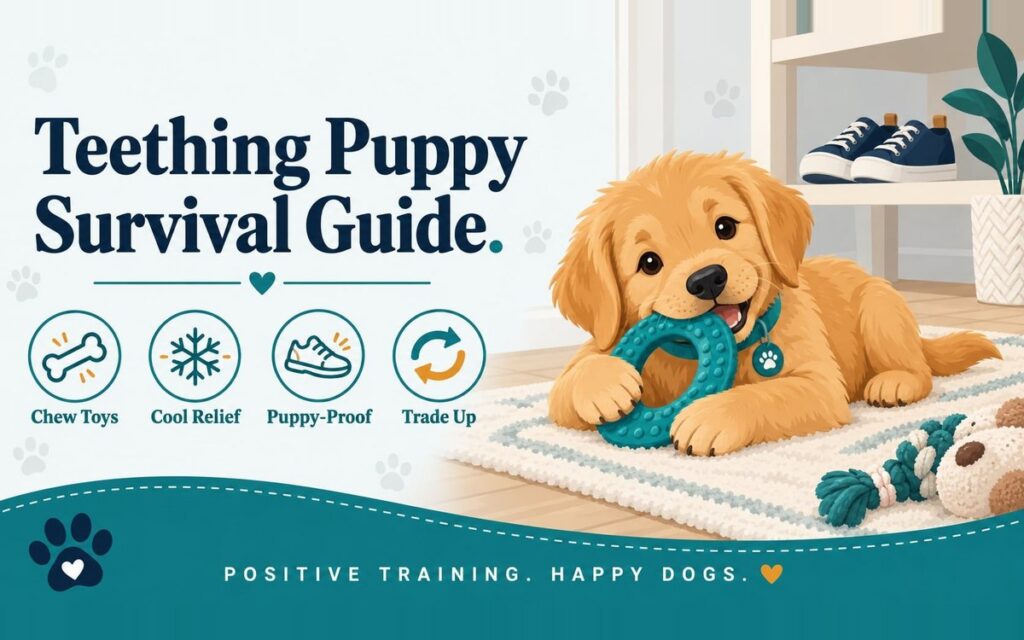
Chewing is not naughtiness. It is a genuine need, especially while adult teeth are coming through. The goal is not to stop your puppy chewing, which would be impossible and unkind. The goal is to teach them what they are allowed to chew, and to keep everything else out of reach until that lesson sticks. Here is how to do it.
Why Puppies Chew
- Teething relief. Gnawing eases the ache of sore, swollen gums.
- Exploration. Puppies learn about the world through their mouths.
- Boredom. A puppy with nothing to do will find something to do, usually something you love.
- Self-soothing. Chewing releases calming chemicals in the brain, which is why anxious or overtired puppies chew more.
- Attention. If grabbing a sock always starts a chase, that sock becomes the best toy in the house.
The Puppy Teething Timeline
Knowing what is happening in your puppy’s mouth helps you prepare.
| Age | What is happening |
|---|---|
| 3 to 6 weeks | Baby teeth come in, still with the breeder |
| 8 to 12 weeks | Sharp baby teeth, lots of play biting and exploring |
| 12 to 16 weeks | Baby teeth start falling out, adult teeth begin to push through |
| 4 to 6 months | Peak teething, the most intense chewing period |
| 6 to 7 months | Most adult teeth are in, though many dogs keep chewing to set their teeth |
You might find tiny baby teeth on the floor or notice a little blood on toys. Both are normal. If you notice a baby tooth still in place next to an adult tooth after about seven months, mention it to your vet.
Step 1: Puppy-Proof Your Home
Prevention is the most powerful tool you have. Every time your puppy successfully chews something forbidden, they practice the habit. Before your puppy has the chance:
- Put shoes, socks, and laundry behind closed doors or in baskets with lids.
- Tuck electrical cables behind furniture or cover them with cord protectors. Chewed cables are a serious safety risk.
- Move houseplants out of reach, since several are toxic to dogs. My guide to plants and household items poisonous to dogs lists the main ones.
- Keep children’s toys, remote controls, and phone chargers off the floor.
- Store medications, cleaning products, and bins securely.
- Use baby gates or a playpen to limit your puppy to puppy-proofed areas.
A smaller space means fewer temptations and easier supervision. You can give your puppy more freedom as they prove they can handle it.
Step 2: Provide the Right Chews
Offer a variety of textures so your puppy can find what soothes them best. Rotating toys every few days keeps them interesting.
- Rubber chew toys that can be stuffed with food and frozen.
- Puppy-specific teething toys designed for softer baby teeth.
- Rope toys for chewing and gentle tug.
- Frozen carrots, which are cold, crunchy, and safe for most puppies.
- A wet washcloth, twisted and frozen, which feels wonderful on sore gums. Supervise so it is not swallowed.
Avoid very hard chews like antlers, hooves, and cooked bones for young puppies, as they can damage developing teeth or splinter. Always supervise new chews, and replace toys once they start breaking apart.
Step 3: Teach “Theirs” Versus “Not Theirs”
When you catch your puppy chewing something they should not:
- Calmly interrupt with a neutral sound like “oops.” No shouting.
- Offer an appropriate chew toy in exchange.
- Praise warmly the moment they start chewing the right thing.
- Put the forbidden item out of reach.
The trade is the key. Simply taking things away teaches your puppy to grab and run. Swapping for something good teaches them that giving things up pays off. This is also the foundation of a reliable “drop it” cue, which you can learn in my leave it and drop it guide.
Step 4: Reward Good Chewing
We often notice puppies only when they are causing trouble. Make a point of praising your puppy quietly whenever you see them chewing their own toy. You can even drop a small treat beside them. Good chewing that gets noticed becomes good chewing you see more of.
Step 5: Meet Their Needs
A tired, satisfied puppy chews far less destructively. Make sure your puppy gets:
- Enough sleep. Around eighteen hours a day. Overtired puppies chew more.
- Mental exercise. Short training sessions, puzzle feeders, and sniffing games tire the brain. My dog enrichment ideas are full of options.
- Play. Gentle games and short training games burn off energy.
- Company. Puppies left alone too long often chew out of boredom or worry. See puppy separation anxiety if chewing happens mainly when you are out.
Use the Crate or Pen When You Cannot Watch
When you cannot supervise, pop your puppy in their crate or a puppy-proofed pen with a safe chew. This is not a punishment. It simply keeps them safe and prevents them practicing bad habits. Introduced kindly, the crate becomes a favorite resting place. My crate training schedule explains how to build that positive association.
What About Deterrent Sprays?
Bitter-tasting sprays can help protect specific items like furniture legs. They work best alongside the steps above, not instead of them. Some puppies do not mind the taste at all, so test it first. A spray only tells your puppy what not to chew. You still need to show them what they can chew.
Mistakes to Avoid
- Punishing after the fact. Puppies cannot connect a scolding to something they chewed earlier. Calm management and redirection work much better.
- Giving old shoes as toys. Puppies cannot tell the difference between an old shoe and your new ones.
- Chasing your puppy. Running after a puppy with a stolen sock turns it into a game. Trade instead.
- Too much freedom too soon. Expand your puppy’s space gradually as they show good habits.
When to Talk to Your Vet
Speak to your vet if your puppy seems to be in real pain, stops eating, has very red or swollen gums, or has retained baby teeth past about seven months. Also seek help straight away if your puppy may have swallowed something they chewed, such as a piece of toy, sock, or anything toxic.
Building a Routine That Prevents Chewing
Destructive chewing shrinks dramatically once your puppy has a predictable rhythm of sleep, play, training, and quiet time. My puppy training schedule by age shows exactly when teething tends to peak and what to focus on around it. The printable checklist helps the whole household stay consistent through the toughest months.
Troubleshooting Common Chewing Situations
“My puppy only chews when I leave the room”
This usually means the chewing is about attention or mild worry rather than teething alone. Practice tiny absences: step out of the room for ten seconds while your puppy works on a stuffed chew, then come back calmly before they notice you are gone. Build the time up slowly. If your puppy has a frozen chew every time you leave, your departures start to predict something good.
“They ignore their toys and go straight for the furniture”
Wood and fabric have textures that many toys do not. Try offering chews that mimic what your puppy is choosing. A puppy who loves table legs often enjoys a firm rubber stick or a natural chew of similar thickness. A puppy who shreds cushions may love a fleece tug toy or a soft rope. Then make the toy exciting by playing with it yourself for a moment before handing it over. Toys come alive when you are involved.
“The chewing gets worse in the evening”
The witching hour is real. Many puppies get wild and mouthy in the early evening because they are overtired, not under-exercised. Rather than adding more play, try a calm chew session followed by a nap in the crate or pen. You will often find the frantic chewing vanishes once your puppy has slept.
“My puppy steals things and runs”
This is a game your puppy has learned works. Stop chasing completely. Instead, keep a pot of tasty treats in a few rooms. When your puppy grabs something, walk the other way, rustle the treat pot, and reward them for coming over and dropping the item. When Poki was small, he figured out that stealing a sock made me sprint across the flat. Once I stopped running and started trading, the sock thefts dropped within a couple of weeks.
A Sample Teething Day
Here is roughly how a day might look for a four to five month old puppy at peak teething. Adjust the times to fit your household.
- Morning: Potty break, breakfast in a puzzle feeder, a short sniffy walk, then a nap.
- Mid-morning: Five minutes of training, then a frozen washcloth or carrot to soothe the gums.
- Midday: Lunch stuffed into a rubber toy and frozen, followed by a long nap in the crate.
- Afternoon: Gentle play, a scatter feed in the garden, and another rest.
- Evening: A calm chew while the family eats, then a final walk and bedtime.
Notice how often chewing is built in. When your puppy gets regular, approved chewing sessions, the urge to chew your belongings drops sharply.
Teething Puppy FAQs
How long does the chewing phase last?
The most intense period is usually between four and six months. Many dogs then go through a second, smaller chewing phase between about seven months and a year as their adult teeth settle into the jaw. Keeping good habits in place through both phases makes a big difference.
Is it safe to give my puppy ice cubes?
Small amounts of ice or frozen treats are fine for most puppies, but very hard ice can be rough on young teeth. Frozen stuffed toys and frozen washcloths are gentler options that last longer.
Should I worry if my puppy swallows a baby tooth?
No. Puppies swallow most of their baby teeth while eating, and they pass through without any problem. Finding only a few teeth around the house is completely normal.
Can I use human teething gels on my puppy?
No. Some human teething products contain ingredients that are not safe for dogs. If your puppy seems very uncomfortable, ask your vet about safe options instead.
Will my puppy grow out of chewing?
Most dogs chew less as adults, but chewing remains a natural and healthy behavior throughout life. Adult dogs still benefit from appropriate chews for mental enrichment and dental health. What changes is that a well-taught dog knows which items belong to them.
Want a Step-by-Step Program?
Boredom is one of the biggest drivers of destructive chewing. Brain Training for Dogs by Adrienne Farricelli, a certified professional dog trainer (CPDT-KA), focuses on mental stimulation through positive, reward-based brain games, which is exactly what a busy teething puppy needs. Each exercise is demonstrated on video.
The Bottom Line
A teething puppy needs to chew, so give them better options than your furniture. Puppy-proof your home, offer a variety of safe chews, trade forbidden items for toys, praise good chewing, and make sure your puppy gets plenty of sleep and mental stimulation. Use the crate or pen when you cannot supervise. The peak of teething passes by around six or seven months, and with these habits in place your puppy will come out the other side knowing exactly what is theirs to chew.
Dog lover and devoted owner of a Golden Retriever named Poki, sharing what she has learned raising him with kind, positive methods. Learn more about Milica.